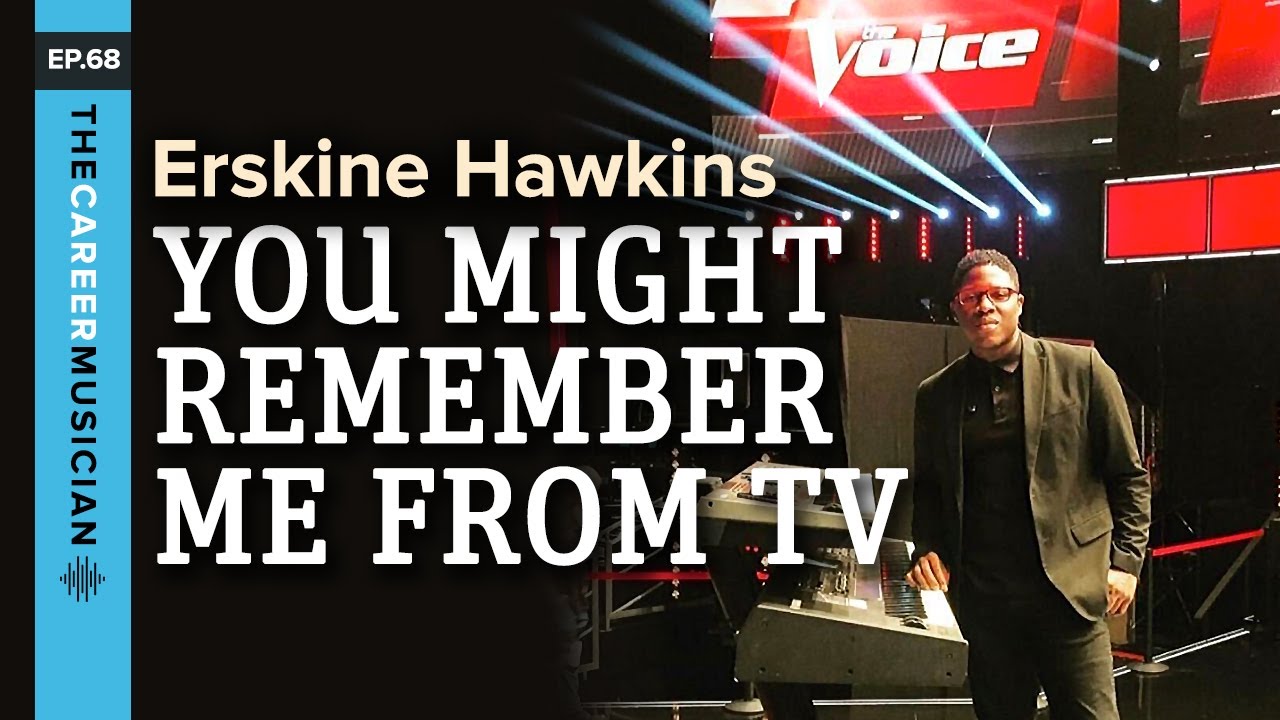
Always Ready: Erskine Hawkins on Being a First Call Keyboard Player (Episode 68)
Luck = preparation + opportunity.
When Nomad needed a keyboard player for the Babyface band, Erskine Hawkins stood out from the crowd. His professionalism and stacked resume got him the gig. That resume keeps going: a graduate of the music program at the University of North Texas, founder and CEO of Key Element Entertainment, and keys for Rihanna, Eminem, David Foster, Jessie J, Kirk Whalum, BWB, Tamela Mann and Eric Benét. He has charted, scored and arranged for artists like Justin Timberlake and Nicki Minaj and for major award shows.
In Episode 68 of The Career Musician, recorded over breakfast while the Babyface band was on tour in Japan, Erskine shares the habits that make him a first call keyboard player: always being ready, negotiating honestly, managing money and preparing like a pro. Here is what stood out.
Always there, always ready
Erskine started on drums in church on a military base. He says he was terrible. The grown up drummer didn't always show up, so Erskine always did, early, and most times he got to play. When the minister of music got orders to leave, Erskine learned one simple song on piano so the church would have something. Then he practiced every day.
That habit paid off in college. He went to a late night rehearsal for a big gospel artist just to listen. The second keyboard player never showed. Erskine said he could do it, got the music, stayed up until 8 a.m. learning 14 songs and writing his own charts, made soundcheck at noon and played the show.
Nomad broke down everything he did right: learning by ear, charting for himself, showing up with no promise of anything, staying up to shed, and still being on time. Luck = preparation + opportunity.
Don't fight the hard training
Erskine got into North Texas when his mom walked him into the jazz piano professor's office after auditions were over and asked if her son could play. At the time, jazz piano majors had to pass two years of classical piano first, with juries testing pieces, scales, arpeggios and cadences in all keys.
He failed one jury because he used the sustain pedal on Bach, and the rules sent him back a year. It happened twice, and it took him five and a half years to graduate. He says he was the first African American to earn the undergraduate jazz piano degree under those requirements, and that the school now lets students do jazz and classical studies at the same time.
Nomad's point: the training you think is unnecessary pays off later. Two days before this conversation, Babyface asked the band to recreate a classical intro, recorded by a 60 piece orchestra, live on the spot. Erskine took the harp and the timpani parts. "We're not in the business of making excuses," Nomad said.
Go where the work is, and don't be too proud to audition
Erskine told his mentor he didn't want to be a "local yokel." So he moved near New York City and rode the train in every day, taking any gig or jam session he could just to get his foot in the door. A friend who was music director for Chrisette Michele told him to finish college first, then brought him in when a keyboard chair opened. He stayed six or seven years.
He kept auditioning anyway, and noticed something.
"The top guys don't go to auditions. If I'm not too proud, if I'm willing to go to auditions, you can really clean up."
Erskine Hawkins, 40:11
Even his first Babyface audition was a no. He moved to LA anyway, trusting that what is supposed to be yours will be yours. Two months later, Nomad emailed: the boss had asked about him. He re-auditioned and got the gig. Everything you do is an audition, including the ones you don't win.
Be honest, and overshoot on purpose
At a later audition, the artist's father pulled him aside before the callback and asked what it would cost to get him. Erskine had already accepted dates with Eminem. So he led with honesty, a lesson he credits to Adam Blackstone: say up front when you are not available. They worked around it.
Then he quoted a weekly rate on the high side, on purpose, because he didn't know the budget, and told them he was flexible if it was over. They talked him down. A year later, when he became music director, he got his original number.
Nomad's lesson: confidence is not arrogance. Too arrogant and you price yourself out. Too humble and you say "whatever you want to pay me." Know your worth, and leave room to negotiate.
Money gives you the power to say no
Erskine's mom told him never to let anyone put him in a corner without money, because then you have to take every gig. His parents cut him off at 18, and he paid his own way through college. He kept his savings at a different bank with no card, so he couldn't impulse transfer, and graduated with $13,000 to $14,000 saved.
"If you don't have money, you can't do anything."
Erskine Hawkins, 58:15
His rules: when a big check comes in, keep what you need to live and save the rest. Wait until a few of those checks actually arrive before you spend like they will keep coming. Get a roommate if you are always on the road. Save per diem when the venue feeds you. Today his family lives on his wife's teaching salary, and his music income goes to savings.
Nomad added that work comes in seasons for everyone, even top composers. Diversify, too: some savings, an emergency fund, investments, retirement. And there is no single right way. A friend who spent every per diem on sneakers went on to a huge solo career. Have a plan, find your balance. Make Music Your Business.
Prepare like the gig is the audition
Erskine's prep is a masterclass:
- Sounds. His home rig matches his stage rig exactly, so he builds sounds at home to match the record and loads them in. No holding up soundcheck to program patches.
- The show. When the MD sends a 90 minute recording, he chops it into individual songs, listens through five or six times, slows tricky parts down in software, and writes full charts when there is too much to memorize. Some gigs have no rehearsal with the artist. That is a live audition. Mess it up and you won't be back.
- Practice. One measure at a time, one hand at a time, phone out of sight.
- Communication. Answer the MD's email with one word: received, confirmed or copied. Reply to the sender, not reply all. He saves artists as favorites and usually answers within minutes.
Nomad, as music director, put it bluntly: slow response time is the fastest way to get replaced. If he can't reach you, he can't depend on you. That is Reliability beats virtuosity.
The takeaway
Erskine's advice is to think strategically about what sets you apart. For him it was education, plus gospel, hip hop and pop experience, which makes him a one stop shop for playing, arranging and charting. Be versatile, keep a keyboard with you, save your money, and build other skills for the day you don't want to tour anymore. To prepare for your next audition the way he does, start with the free Audition Secrets guide.
Get the gig. Keep the gig. Build the career.
Watch on YouTube or find every episode on the TCM Podcast page.
Your next step
If this episode lit something up, start with the free Get the Gig Guide. It is the career side of being a professional musician, the part nobody taught you.
Got an audition coming up? Grab Nomad’s Audition Secrets playbook, because everything you do is an audition.
And share this one with a musician who needs to hear it.
TCM listeners and readers get 20% off rehearsal studio time at PA Rehearsal Studios with code TCM20.