Supply and Demand: Babyface’s Cast and Crew on the Music Business Behind the Scenes (Episode 11)
You learned how to make music. Nobody taught you how to make a living making music.
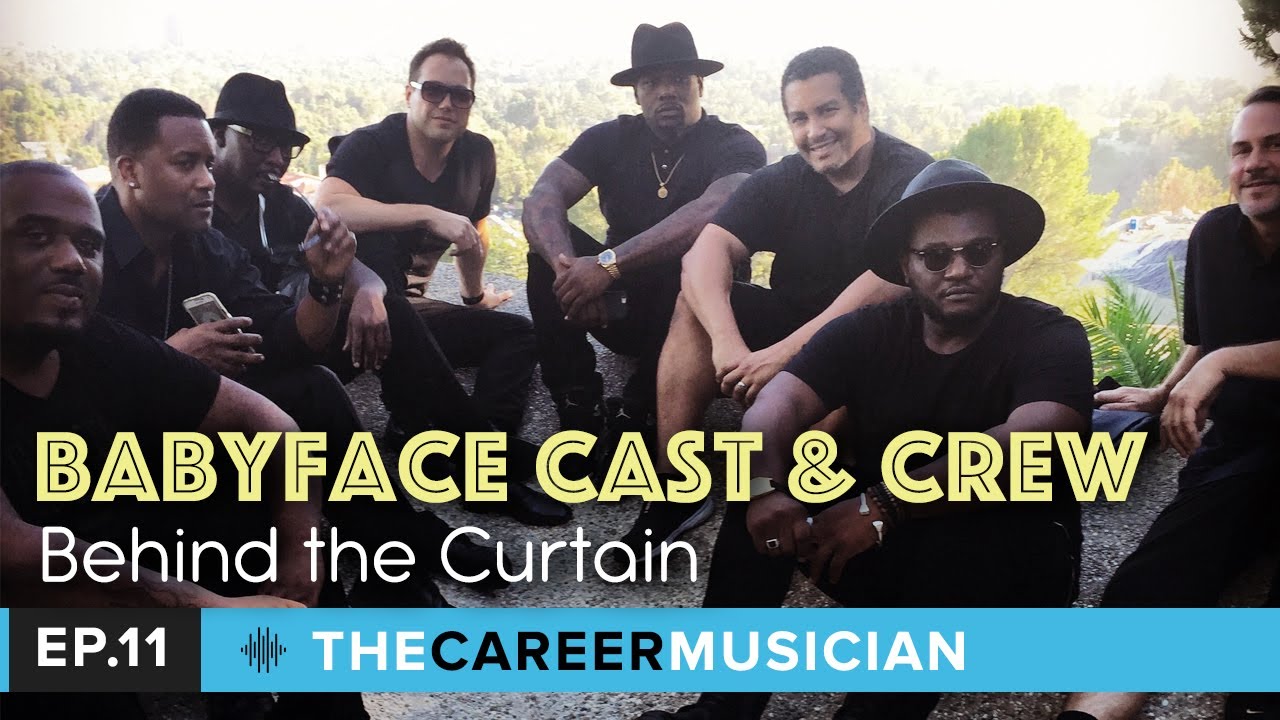
Episode 11 of The Career Musician is a short one, recorded backstage right after soundcheck with the crew of the Kenny "Babyface" Edmonds camp. No Babyface just yet. Instead, Nomad sits down with the people who make the show happen: the drum tech, the production manager, the stage manager and the stylist.
This is real talk from behind the curtain, and it centers on one idea every working player needs to understand: supply and demand in the music business.
You are the product
The drum tech, who also builds custom drums for touring artists, opened with a simple point. Being a musician, you are also a product. And in the industry we chose, there is a very large supply of players for a modest demand. Competition is high.
"Just like a product, when there's excess supply and little demand, price cutting happens."
Drum tech, 2:04
He compared it to the soda aisle. When there are ten thousand sodas on the shelf, people grab whatever is on sale this week. That is how a lot of buyers treat musicians, too. That is the reality, and it is exactly why you have to Make Music Your Business. Know the market you are in.
Don't undercut each other
Here is where Nomad got direct. The most common way people try to win in a crowded market is cutting their price. "I'll do it for 50 bucks less." "I'll do it for 1,200 a week instead of 1,500."
His answer: don't do this to one another. Keep integrity in the industry. He has made a career out of this, and so have his peers and friends. There's enough to go around. When you race to the bottom on price, you don't just hurt the player you underbid. You lower the rate for everybody, including you next year.
Fewer rooms, more reasons to be great live
The crew agreed the landscape has shifted. Fewer tours, fewer clubs with live bands, and technology makes it easy to skip real musicians altogether. A business owner can plug a phone into a couple of speakers and the entertainment is done.
The production manager remembered when a band could play a club for a week, three sets a night, and work five or six clubs within a 40 or 50 mile radius. A lot of that is gone, and touring has gotten expensive. Still, his take was clear: there is no substitute for the live show.
Nomad feels the same. He doesn't want people only looking at his Facebook or YouTube page. He wants them interacting with him in a live context. Then the stage manager walked in fresh from trying a virtual reality headset, raving about it, and it made the point for them. It's amazing, but it's a simulation. It's not the same as being there in person.
Persevere, and stay consistent
Under all the supply and demand talk is the episode's real message. Nomad said what separates the people who reach their dreams from the people who don't is the willpower to go for it in the face of adversity.
"I know the stats, I know the odds stacked against me, I know the reality of the music business. But guess what, it doesn't stop me."
Nomad, 5:41
His word for 2018 was consistency: in your actions, your routines, your practicing and your business protocol. Stick with it for the long haul, and you will see the results of those consistent efforts. That is Reliability beats virtuosity applied to a whole career, not just one night.
The people who make you look good
The episode also gives a nod to the roles most fans never see. A stylist and personal assistant who works with the band explained his job in one line: make them look good and send them to the stage. Without people like that, as Nomad said, it is really hard to get up there and look good.
The crew is part of the show. Treat them that way. Every tech, stage manager and assistant on that bus is watching how you work, because Everything you do is an audition.
The takeaway
The market is crowded and the rooms are fewer. You can't control that. You can control your price integrity, your live show and your consistency. Don't undercut your peers, be the player people want to see in person, and keep showing up. If you are working on getting into a camp like this one, start with the free Get the Gig guide.
Get the gig. Keep the gig. Build the career.
Watch on YouTube or find every episode on the TCM Podcast page.
Your next step
If this episode lit something up, start with the free Get the Gig Guide. It is the career side of being a professional musician, the part nobody taught you.
Got an audition coming up? Grab Nomad’s Audition Secrets playbook, because everything you do is an audition.
And share this one with a musician who needs to hear it.
TCM listeners and readers get 20% off rehearsal studio time at PA Rehearsal Studios with code TCM20.