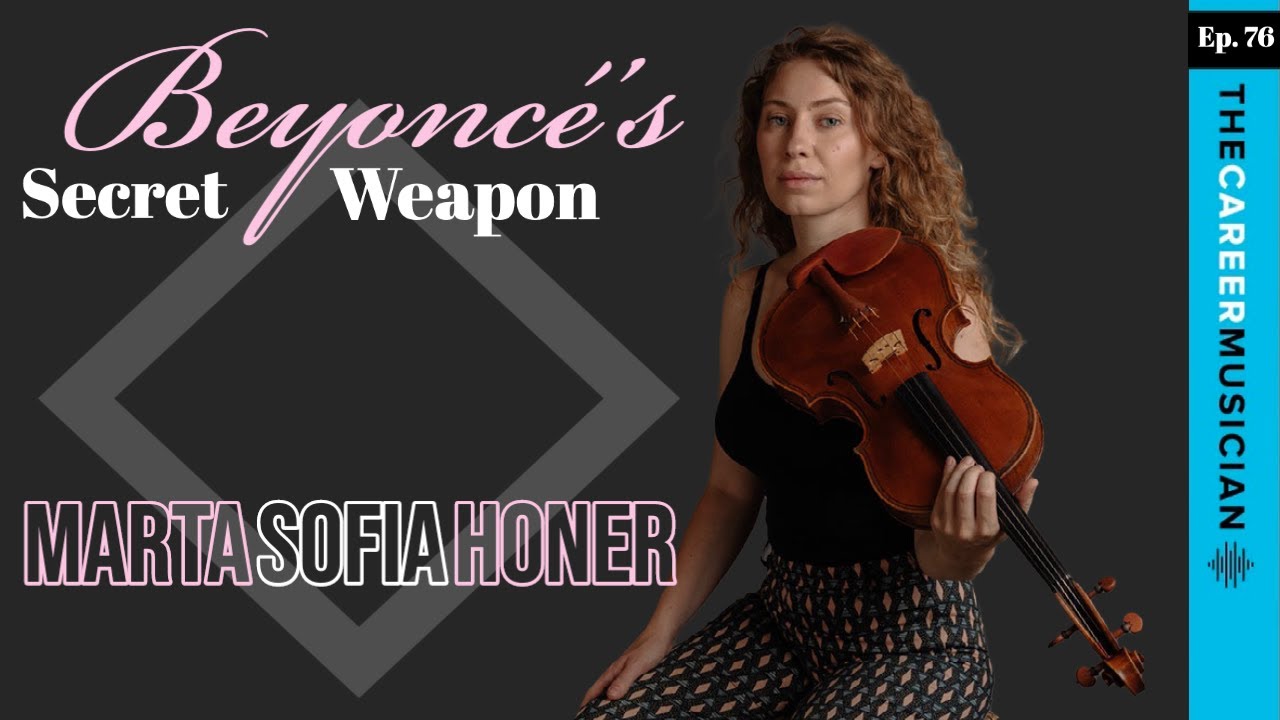
Beyoncé's Secret Weapon: Marta Sofia Honer on Session String Work (Episode 76)
Everything you do is an audition.
Nomad has a nickname for Marta Sofia Honer: Beyoncé's secret weapon. The violinist and violist has brought strings to Beyoncé, Mariah Carey, BTS, Kamasi Washington, Portugal. The Man, Lauryn Hill and Ariana Grande, and she works the LA session scene for film and TV, including the last season of The Good Place.
In Episode 76 of The Career Musician, she talks about how a classically trained string player becomes a working session musician: the versatility, the etiquette and the business habits that keep the phone ringing. Here is what stood out.
Groomed for classical, built for everything
Marta grew up in the Midwest in a musical family. Her mom runs a violin school, and Marta was, in her words, basically groomed to be a classical musician. But even as a teen practicing all the time, playing youth symphonies and concerto competitions, she was also playing in a post rock band that won a youth battle of the bands and cut a full record.
She picked up viola for chamber music, and it became her primary instrument. Her description of the difference is the simplest one you will hear: violin is the soprano voice, viola is the alto. She loves playing the inner voice, the go-between, where the beautiful harmonic movement often goes unnoticed.
That split between worlds never went away, and she is glad. Even in LA, she works to make sure she is not pigeonholed and only hired for one thing. Nomad's take: versatility is one of the big premises of TCM. The more styles you can cover, the more opportunities show up.
The room decides if you get called back
Classical players tend to be a little more rigid and serious. Film scoring runs on the union clock. Pop sessions often don't. You might have notes on the page, or none at all.
"You can be flexible with having notes on the page or no notes on the page, and how you interact and behave in those environments determines if you're going to be called back or not."
Marta Sofia Honer, 13:15
When she moved to LA from Chicago and realized how big scoring work was for string players, she identified the skill she needed and went after it. For about a year and a half, while the calls were few, she practiced only with a metronome, on 24/7, because that is the setting on a scoring stage.
That is Luck = preparation + opportunity. She prepared for the room before the room ever called.
Sit in the back and pay your dues
Nomad asked about studio etiquette, and Marta's answer is one every young player should hear. On a big session there is the composer, the conductor, the contractor, and a lot of players who have sat on that stage for 20 or 30 years. To them, she is the new kid.
So if there are no seating assignments, she seats herself in the back. She is not trying to flex or take anyone's spot. She will sit with the trumpet bells right behind her head for as long as it takes.
She also keeps a healthy view of the gigs she didn't get. Everyone gets a little salty when a friend lands the fun call. Her reminder to herself: we chose to be freelancers.
"No gig is owed to you. If you get called for the gig, that is your gig."
Marta Sofia Honer, 35:36
This is Humility from the ETHOS code, and it is the definition of low maintenance / no drama.
Professional habits are the business
When Nomad asked about business acumen, Marta credited a demanding college orchestra conductor. Be in your seat 20 to 30 minutes early or you are late. Answer his email within hours, even with just "okay." As students they thought he was a pain. It trained them into a level of professionalism that paid off later.
When she moved to a new city with basically zero connections, those habits did the work: respond fast, be polite, say clearly whether you are available, be on time, bring the gear the gig needs, keep a positive attitude, say thank you. Nomad added the long view on relationships: don't get upset if you don't get the call right away. Marta had just done a job for someone she had known for nine years, who finally called her for work.
Subbing out is part of that. LA players sub out all the time when a crazier gig pops up. Marta's rule: weigh it against the relationship, and be especially careful with the people you get the most work from. There is no shortage of talented musicians.
Then there is money. A friend coached her that you can put art first and still believe you deserve to be paid. That changed how she budgets, saves, chooses gigs and sets her rates. Nomad's add: block admin time, write a proper invoice, send it with a polite email, and follow up a few days later. Net 30 is the ideal. Chase it anyway. Make Music Your Business.
Show people you are available
When lockdown wiped her calendar, Marta made a short promo video showing her home studio, her gear and her remote recording process. She wanted composers who had never worked with musicians remotely to feel comfortable with the idea. Her partner filmed it, and she learned the editing software herself in a week. You can see it on her website.
She wrote several drafts of the voice over because she was conscious of the line between letting people know you are here and bragging. Nomad called it the only example of a self-promo video you will ever need.
Her advice for players thinking about moving to LA is just as practical: do your research. Find out who the contractors and music directors are. Follow them, see what projects and artists they work with, and learn the lay of the land so you know where things stand when you walk in.
Take care of the body that plays
The episode also gets into health, which matters more when so much work happens alone at home. Marta practices standing, brings her own cushion to sessions, and splits recording and comping to give her ears and body a break. Her brother, also a violinist, gave her a tip that works for any instrument: think about how you hold your body to play, then stretch in the opposite direction.
The takeaway
Marta calls herself the baby among the show's guests. Nomad says she already has the career musician mentality: open, prepared, humble and professional. Be ready for every kind of room, take the back seat until it is your turn, and treat every response, invoice and session like it matters. It does. If you want to walk into your next opportunity prepared, start with the free Audition Secrets guide.
Get the gig. Keep the gig. Build the career.
Watch on YouTube or find every episode on the TCM Podcast page.
Your next step
If this episode lit something up, start with the free Get the Gig Guide. It is the career side of being a professional musician, the part nobody taught you.
Got an audition coming up? Grab Nomad’s Audition Secrets playbook, because everything you do is an audition.
And share this one with a musician who needs to hear it.
TCM listeners and readers get 20% off rehearsal studio time at PA Rehearsal Studios with code TCM20.