Sell Yes: Carl Rydlund on Building a Film Music Career (Episode 59)
Reliability beats virtuosity.
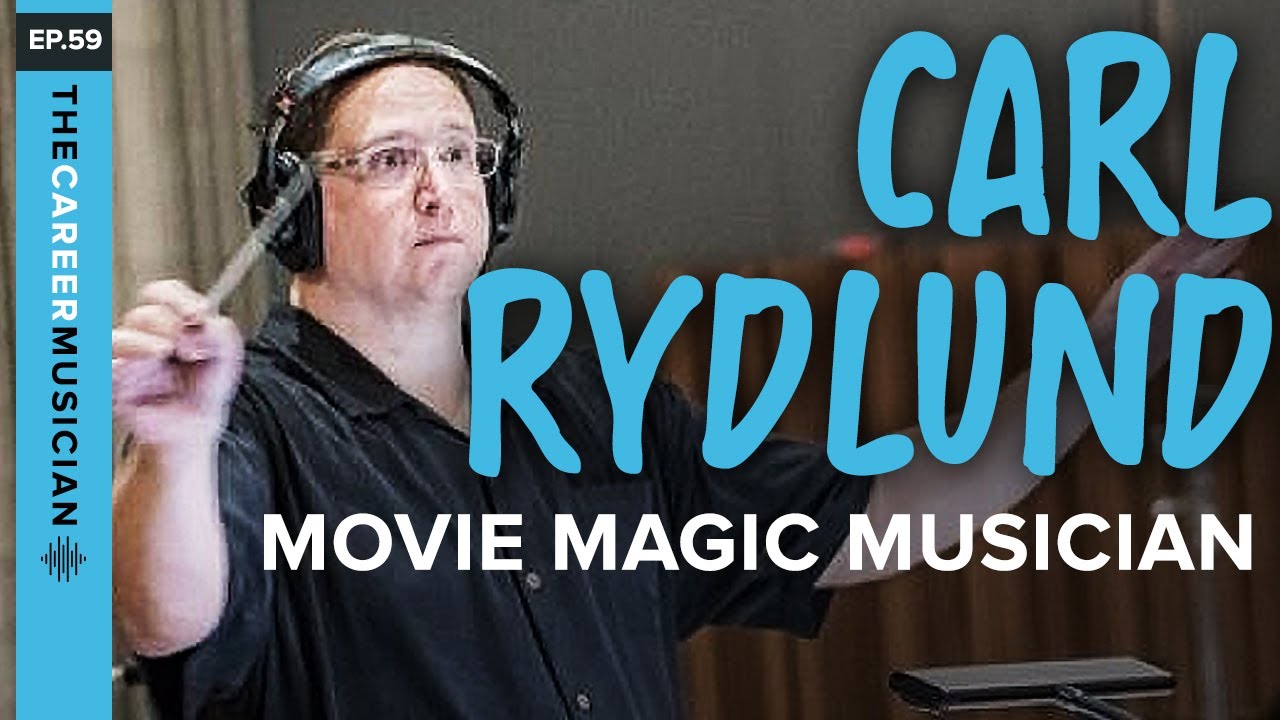
Carl Rydlund started with a degree in woodwinds and orchestration, became a composer and conductor, and then, because that wasn't enough, became a studio session guitarist too. His credits as orchestrator, guitarist, conductor and music prep include Joker, The Lion King, Batman v Superman and Men in Black, and he has worked with Hans Zimmer and Barbra Streisand.
In Episode 59 of The Career Musician, Nomad gets Carl to open up about what it actually takes to build a film music career in Los Angeles. It starts with one line.
You are in the business of selling yes
When Carl moved to LA, it became obvious fast: nobody wanted caveats. They didn't want to hear about your kid's school pickup or how you'd make it work. Back then, a call service would ring and say be at Capitol at five tomorrow. Today the composer or contractor calls you directly, and they still just want to hear one word.
His line for it: he is in the business of selling yes. They want to hear, I'm going to be there.
Carl says it cuts down on your own anxiety, too. All the logistics play out anyway. If all you have to decide is yes or no, there's nothing to worry about.
Play the long game
Carl studied with a lot of great guitar players, including Tommy Tedesco. When he showed up at Tommy's house, the first question was where he lived. Van Nuys. How long are you going to stay? The rest of my life. Okay, Tommy said, I'll teach you, because if you only give yourself 20 years to succeed, you're screwed.
Carl believes he kept staying no matter what happened because of that statement. He compares it to the stock market: you'll have ups and downs, so don't check your stock every day.
He also learned that the best lessons happen on the job. On sessions with players like Dean Parks, while everyone grabs coffee, you learn more watching them work than you would in college.
Learn by hearing what you wrote
Carl decided at age four to be a clarinet player, so he could work weekends with his dad, who owned a music store and had a big band in Denver. Every Sunday they had to put the band's charts back in order. Carl started copying the parts onto score paper to figure out what the trumpets and trombones were doing. Then he started writing charts for the band.
A lot of them were terrible, he says. But the players told him: don't ever do this again, I can't play that high, the instrument doesn't work that way. He'd fix it and they'd play it the next week. In his words, the best way to learn is by hearing what you've written.
At the Grove School of Music in LA, it was the same idea on a deadline: get an assignment Thursday, arrange it, orchestrate it, copy all the parts by hand, and conduct it live Tuesday morning. A year of that. No excuses. Never late. Always prepared.
No excuses, just solve the problem
Carl's favorite old Hollywood joke: nobody knows you're here, nobody wants you here, and nobody will miss you when you're gone. If you can get your head around that, you are ahead of the game.
The night before a pre-record session for the Oscars, with Hans Zimmer as musical director, one of the orchestrators had a stroke. Carl was told to finish the chart. It was a 400-bar cue. The orchestrator had stopped at bar five. It was 11 at night, and it had to be on the stand at 10 a.m. for a 70-piece orchestra. He said yes, stayed up all night, and handed it in. Nobody said a word, which in this business means it went fine.
That is Reliability beats virtuosity. The only time anybody calls is when something goes wrong.
Say yes, and know when to say no
Carl's first time at Abbey Road was as an orchestrator on a session with the London Symphony Orchestra. The composer insisted on conducting. After day one, the orchestra said if he conducted tomorrow, they quit. Carl came in the next morning wondering who they'd found. The producer said: you orchestrated all this, right? You're conducting. Carl said okay, and conducted the LSO for four more days. It was his first conducting gig for money.
He could say yes because he had studied conducting at Grove for a year and had been an MD. Luck = preparation + opportunity. But the real trick, he says, is knowing when to say no. Tommy's three reasons to take a gig: does it pay great, does it advance your career, or is it super fun? If not, probably say no. Or if you're not the guy for the gig.
Early on, when someone asked if he played banjo, he said yes. After getting in trouble a couple of times, he learned to ask: do you want the color of a banjo, or a real banjo player? If it's the real deal, he has six guys way better than him to recommend.
"Anytime you have someone sub for you, send someone better than you."
Carl Rydlund, 35:09
He has never seen anyone lose a client by sending someone better. When he is conducting and a player sends a great sub, he definitely calls the original player back, because that player was smart enough to send someone better. Low maintenance / no drama means making the person who hired you look good, even when you can't be there.
Charge for everything except the music
As a writer, Carl realized early that if he tied his fee to the music, criticism would break his heart. So he flipped it.
"I don't charge for music. I charge for everything else. I give music away. I charge to sit in this chair... I charge to get to the session. I charge to drive home."
Carl Rydlund, 25:53
It is a mindset that protects him. If he gives the music away, their opinion doesn't hurt. And the respect of his peers is his pay.
The money side still matters. Larry Carlton once returned a cold call from Carl and gave him one of the two best guitar lessons of his life: cultivate horizontal money, you're going to need it. That is the money you get while lying down: residuals, royalties, special payments. Carl says he was the banjo at the beginning of Pirates of the Caribbean, and he got residuals on it for a long time. Nomad's point: special payments are a big reason to join the union. Make Music Your Business.
Be a verb, not a noun
Carl still studies conducting, guitar and composition. When someone blows him away, the first thing he does is ask for their number to study with them. Pat Metheny gave him his other best lesson: Carl played Pat's guitar, and halfway through, Pat leaned over and said, still sound like you, don't you? You sound like you whether you like it or not, so cultivate the things you hear yourself do that nobody else does.
You can't be John Williams, Carl says, and the ladder from player to orchestrator to composer doesn't really exist anymore. If you want to be a film composer, come out and do that. He doesn't think of himself as a noun anymore. He's a verb. And he leaves his high school jazz band students with a story he credits to Steve Harvey.
"If you jump, I can guarantee you your parachute will open. You're gonna hit the wall a couple of times on the way down... but you'll end up somewhere new."
Carl Rydlund, 1:00:21
The takeaway
Sell yes. Stay for the long game. Learn by hearing your work played. Solve the problem with no excuses, send a better sub, and build some horizontal money. Then give yourself permission to jump. As Carl put it, he is charging exactly what his opinion is worth, and he gives you permission to go do it.
If you want help getting more of those calls, start with the free Get the Gig guide. Carl's film credits are on IMDb.
Get the gig. Keep the gig. Build the career.
Watch on YouTube or find every episode on the TCM Podcast page.
Your next step
If this episode lit something up, start with the free Get the Gig Guide. It is the career side of being a professional musician, the part nobody taught you.
Got an audition coming up? Grab Nomad’s Audition Secrets playbook, because everything you do is an audition.
And share this one with a musician who needs to hear it.
TCM listeners and readers get 20% off rehearsal studio time at PA Rehearsal Studios with code TCM20.