Never Afraid of No: Chloe Flower on Running Your Music Career Like a Business (Episode 65)
Make Music Your Business.
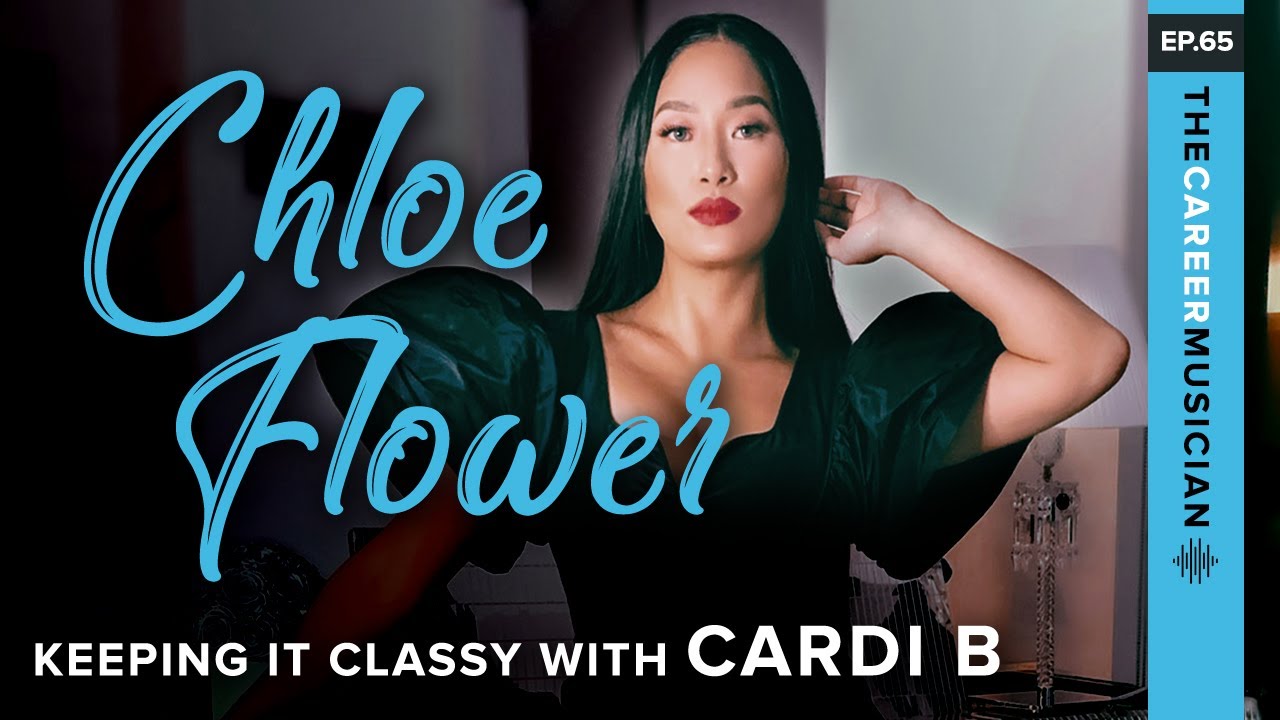
You remember Cardi B's Grammy performance of "Money," and the woman at the blinged-out piano who played that intro. That's Chloe Flower. She's a classically trained pianist who studied at the Manhattan School of Music, a philanthropist working to end human trafficking, and an artist blending classical, pop and R&B into something all her own. In Episode 65 of The Career Musician, she and Nomad, who met through Babyface while Nomad was his MD, talk about discipline, the word no, and why you have to run your music career like a business.
Here is what stood out.
Twelve years old and way behind
Chloe grew up in a small town in Pennsylvania and played her first concert at a nursing home at three or four, sitting on a phone book. At 12, on the way home from a shopping trip, she talked her mom into stopping at a piano competition. She met the winner, a girl her age, and asked how she got so good. The answer: a teacher at the Manhattan School of Music.
Chloe called him and auditioned. He laughed at her. Her hands were half the size of his and she was way behind, but she was musical, and that was the only reason he took her. His terms: practice 12 to 18 hours a day and get into the pre-college division. She had a couple of months, learned the openings of two or three pieces from memory, practiced 12 to 14 hours a day, and got in.
It never really stopped. During quarantine, she told the engineer she works with that she thought she'd finally be resting. His answer: you're an artist, it's never gonna end.
Find your sound, even if it takes ten years
At the Royal Academy of Music in London, bored after hours on a Bach partita, she put her iPod in, hip-hop playing, and started playing her Bach along with it. It worked. The turns of the song matched the turns of the classical piece. London labels wanted to sign her for crossover music, and she said no because she didn't like the sound. She knew it could be better with the right drums.
Years later, back in New York and working as an assistant in Russell Simmons' executive office, she remembered a producer she'd met once at a concert: Babyface. She found his manager's email online, wrote at three in the morning, got an answer right away, flew to LA in January and signed that day. Ten years and more than 200 recorded songs later, she was still working on the album, because she didn't have to release anything until it was right. Along the way she learned to program her own drums by watching Kenny and his team, so every hi-hat and 808 fits like a piece of the orchestra.
Never be afraid of no
Chloe says she isn't much of a hustler. Then she tells you about emailing Babyface's manager in the middle of the night.
"A lot of people are scared of the word no, but it's like, who cares? They'll say no, and then on to the next."
Chloe Flower, 25:33
The Grammy gig came from a dinner. A marketing exec at Atlantic, Cardi B's label, remembered meeting a pianist that night. When the Grammys came around about two years later, she suggested Chloe to Cardi's creative director, who looked at her Instagram and called. Everything you do is an audition, even dinner.
And here's the part most people would never do: Chloe initially said no. "Money" has two piano notes, an E flat and an E natural. She told them to hire a model to play those, then said she would do it if she could play some solos. Cardi said yes, and Chloe calls her a supportive girls' girl with no ego. Know your value, and ask.
Run your career like a Fortune 500 company
For Chloe, the main business now is building a team and treating her music like a Fortune 500 company.
"I'm not a singer, I'm doing a new genre of music. I have to be smart, and I have to be savvy, and I have to be conscientious of all the business aspects."
Chloe Flower, 27:05
That's Savvy from ETHOS, in her own words. She has been taken advantage of as a session artist. She once scored a film and got no credit and no pay. Her point: that would never happen in a business, where you'd have a lawyer and a contract. Imagine doing a Vogue spread and never getting paid or credited.
So she always pays her session players, at least union scale. Nomad added that if you don't know what the union is, look up the American Federation of Musicians: fair wages, plus health, welfare and pension. Too often producers get a budget, hire two players, and never follow up to pay them.
His fix for the awkward money conversation: don't have it yourself. If you don't have a manager yet, have a sibling, a friend or a family member handle it, or even set up an alias email so you're acting as your own manager. Chloe loved it. And make sure your name is spelled right in the credits. Nomad took his artist name partly because people kept misspelling his real one. Make Music Your Business.
Music is service
When Chloe got nervous before a performance as a kid, her mom had an answer.
"You're only nervous because you're thinking about yourself."
Chloe Flower, quoting her mom, 41:28
Performing is an act of service. Go out there to make people feel better, and it doesn't matter who's judging. That's Humility, and it's where her advocacy comes from. She learned about human trafficking while performing in Asia, and since around 2006 she has used music education as a tool of prevention. Her ask for listeners: talk about it, and if you're in a position to, mentor somebody. A sense of community, which is what music education gives kids, changes the choices people make.
The takeaway
Chloe's mantra came from her best friend, who would answer every "I'll do it" with "do it now." Chloe used to be such a procrastinator her nickname was No Show Chloe. Now, even if it's just saving a post to a folder, she does it right away. Discipline crosses over, and so do bad habits.
Practice like it's never gonna end. Don't fear the word no. Pay your players, get your name right, and run your career like a business. If an audition is in front of you, start with the free Audition Secrets guide, and see more from Chloe at chloeflower.com.
Get the gig. Keep the gig. Build the career.
Watch on YouTube or find every episode on the TCM Podcast page.
Your next step
If this episode lit something up, start with the free Get the Gig Guide. It is the career side of being a professional musician, the part nobody taught you.
Got an audition coming up? Grab Nomad’s Audition Secrets playbook, because everything you do is an audition.
And share this one with a musician who needs to hear it.
TCM listeners and readers get 20% off rehearsal studio time at PA Rehearsal Studios with code TCM20.