Confident, Firm, Likable: Chris Lisle on Lighting and Touring (Episode 96)
Work begets work.
Chris Lisle has more than 27 years in the entertainment industry as a production designer, lighting designer, production manager and show producer. His clients include Robert Plant, Keith Urban, Miranda Lambert, Jason Aldean, OneRepublic, Dave Koz, Peter Frampton and Kenny "Babyface" Edmonds. He is also co-founder and executive director of the Touring Career Workshop, a non-profit that serves as "Human Resources for Touring Production Professionals."
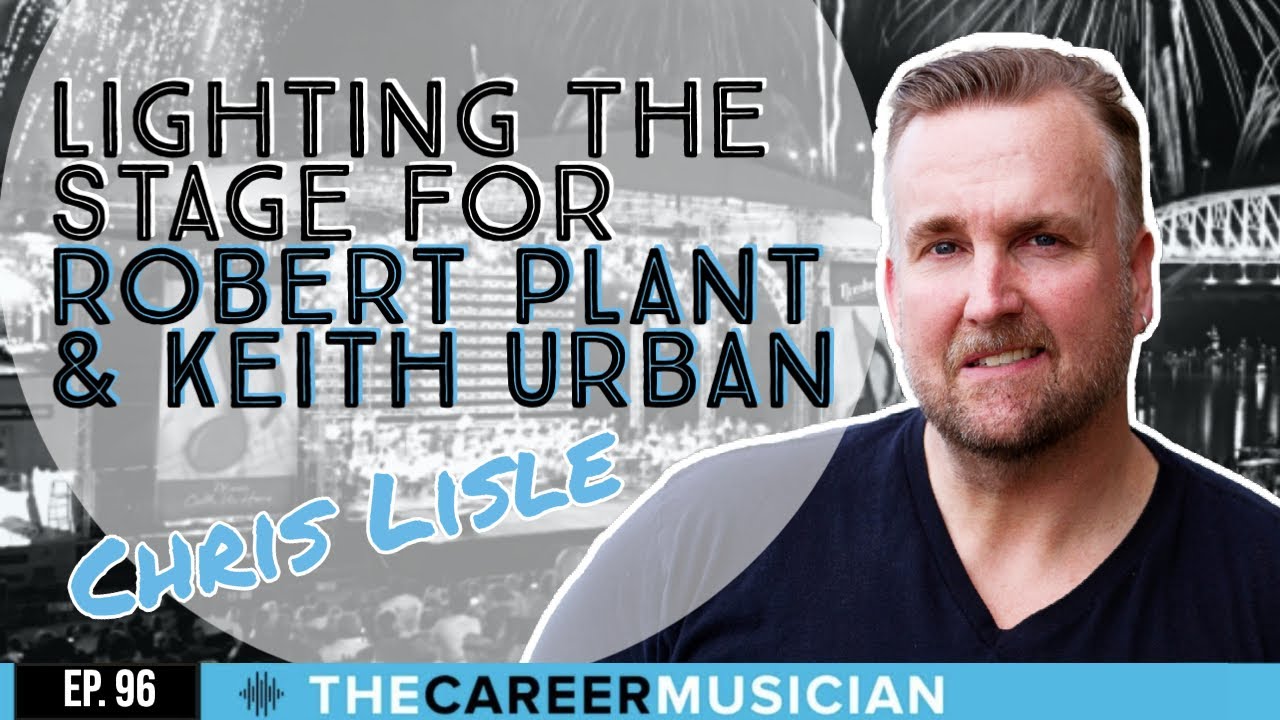
Nomad and Chris toured together with Babyface. In Episode 96 of The Career Musician, they dig into what a lighting designer and production manager actually does, how to lead a crew, and how touring professionals can build a career that still looks good at 60. Nomad's view going in: the crew is part of the band.
Your gigs won't come from the paper resume
"You don't get many gigs off paper resumes. It's all who you know and connections."
Chris Lisle, 2:53
Chris got the Babyface call because a friend knew the camp needed a lighting director. He has taught college classes on touring, and his advice to students is to finish the degree, then be ready to relearn everything in the real world. Like a guitarist who finds their own style by playing, a lighting director learns which colors and moods work by doing it.
His own start: one semester of college, pizza delivery, hanging out with musicians in Nashville clubs. When a musician asked him to run lights on a California run, he admitted he knew nothing, then volunteered for free at a local lighting shop for weeks to learn. On the drive home, crossing Wyoming at sunrise at 19, he knew this was what he wanted to do for the rest of his life.
Designing a show starts with questions
For an arena tour, Chris likes six to nine months of lead time. First meetings cover the practical stuff, budgets and how many trucks, then the artist's vision. He asks what they are listening to, what shows they have been watching and why they liked them. He gathers keywords like "industrial," "shiny" or "slick," lives with the records, and builds drawings that go back and forth with the artist and management.
The challenge is to create something new without copying a look. And he takes the job personally.
"When people come to a show, they may have saved for months and sacrificed eating out just to be there that night. And that night is important to people."
Chris Lisle, 7:34
Outside of EDM, he adds, lights should enhance and complement the artist, not distract from them.
Wear more than one hat
On the Babyface tour, Chris was both production manager and lighting director. A tour that size can't carry 40 people, so crew members cover several roles. He figured out early that a lighting director is most useful on show day, but a production manager works the advance, talks to promoters weeks or months out, gets paid a little more and stays busy. Nomad's version: be as versatile as possible and take initiative.
Chris put it this way: we are all our own businesses. You are your own marketing and HR department, so you are in charge of getting your next gig. That is Diversify or Die for crew and musicians alike.
Confident, firm and likable
Chris learned production management in the fax machine era, by jumping into the fire, watching good PMs and learning from his mistakes. Leadership, he says, is proving to your crew that you are competent and that you have their back, and having the confidence to own a room or a phone call. When advancing a show for an icon, you make sure the promoter delivers what the contract says.
But there is a line between confidence and arrogance.
"Going in and being confident and firm, but likable."
Chris Lisle, 15:17
The artist's name is on the marquee. If you anger the promoters who hire that artist, you hurt the artist and every person who needs that gig. That is Low maintenance / no drama from the production office.
A day in the life of an arena load-in
Chris walked through a typical day on a six to eight truck arena tour. Riggers are first off the bus, marking motor points on the floor in chalk. Trucks start dumping around 8 AM, department by department, usually lighting first because it has the most parts, with touring crew leading local hands. A stage manager polices the load-in while the production manager works the bigger picture. By around 1 PM, the goal is everything flown above head height so backline can come in after lunch.
The schedule is built backward from doors. If doors are at six, house music better be on at six, so sound checks get stacked in the hours before. Then a two and a half to three and a half hour load-out after the show, and bed around 2:30 or 3 AM. When things break, and they do, the crew digs in and gets each other's backs. Reliability beats virtuosity, every single day.
Take care of yourself and your people
Chris was open about the personal cost of the road, including two marriages that ended. Spouses at home can imagine tour life as a party, when it is mostly tired people trying to pull off a show. Twenty-year-old Chris might have talked differently. In his 40s, he wants to sustain a career and leave a positive mark.
He started the Touring Career Workshop in 2011 after watching mentors reach their late 50s broke, in pain from years of jumping off stages, and short on bridges. The annual event covers things like taxes for independent contractors, retirement planning, and panels with spouses and parents about making relationships work on the road. The organization also pays for the first two sessions with one of its listed counselors. His advice to young crew: take the stairs, and start a 401k now, even at $50 a month.
During the pandemic shutdown, he urged everyone to check in on friends in live entertainment, especially heading into the holidays. As Nomad pointed out, working for a superstar does not mean you earn superstar money.
Shut up and listen
Chris's word of wisdom for newcomers might sting a little: sometimes it's okay just to shut up and listen. Listen to the veterans who have been in the trenches. Nomad's matching line: eyes and ears wide open, mouth shut. That is Humility from the ETHOS code, and Chris's definition of success fits it: deliver real value to your clients and keep your integrity intact.
The takeaway
Relationships get you hired. Versatility keeps you working. Confidence plus likability keeps the promoters, the artist and the crew on your side. And planning for your body, your money and your people is part of the job. If you want to build your own career the same way, start with the free Get the Gig Guide.
Get the gig. Keep the gig. Build the career.
Watch on YouTube or find every episode on the TCM Podcast page.
Your next step
If this episode lit something up, start with the free Get the Gig Guide. It is the career side of being a professional musician, the part nobody taught you.
Got an audition coming up? Grab Nomad’s Audition Secrets playbook, because everything you do is an audition.
And share this one with a musician who needs to hear it.
TCM listeners and readers get 20% off rehearsal studio time at PA Rehearsal Studios with code TCM20.