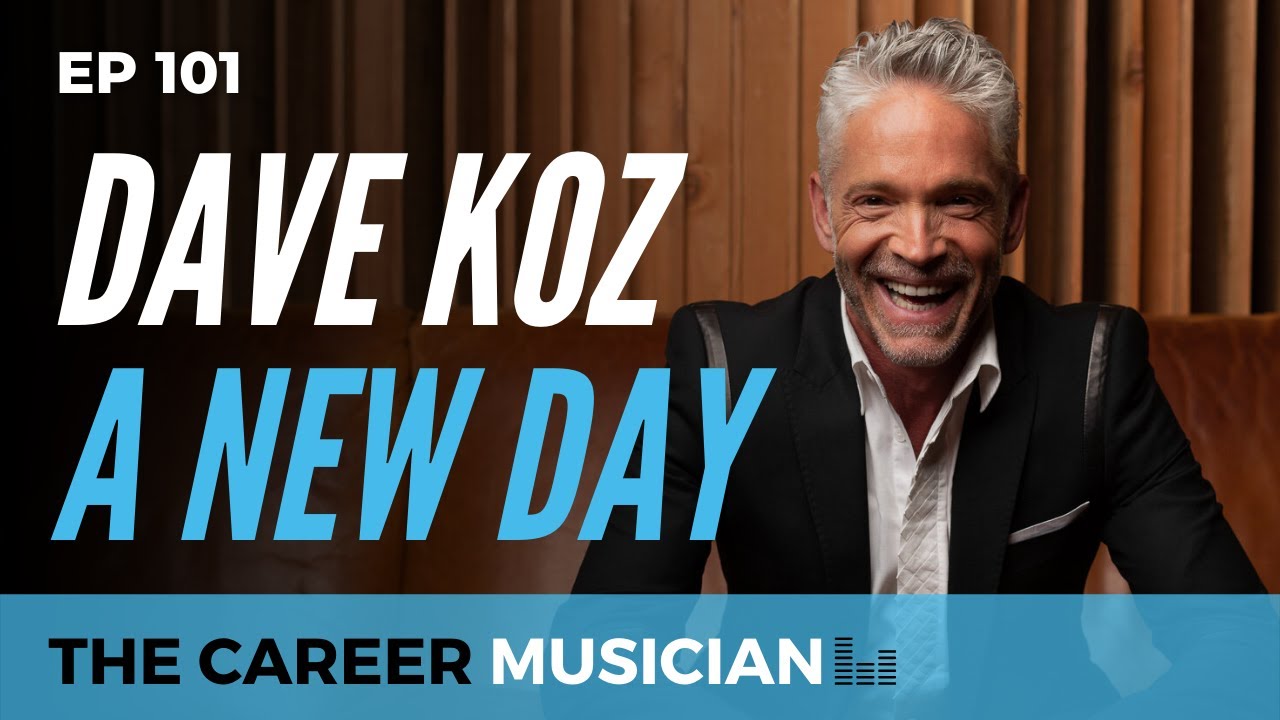
Find You: Dave Koz on a 30-Year Music Career (Episode 101)
Everything you do is an audition.
Saxophonist Dave Koz has a recording career that spans nearly three decades: nine GRAMMY nominations, 11 No. 1 albums on Billboard's Current Contemporary Jazz Albums chart, 13 sold-out Dave Koz & Friends At Sea cruises, performances for multiple U.S. presidents and a star on the Hollywood Walk of Fame. He is also a radio host, an entrepreneur and an advocate for instrumental music.
Episode 101 opened season four of The Career Musician, with Nomad and Eric G asking Dave about the jump from sideman to solo artist, his new album A New Day, and what it takes to keep a music career going for 30 years. Here are the lessons that stood out.
Take the stage when it is yours
Dave's first real gig out of college was with Bobby Caldwell, a two-show Saturday night at a hip Santa Monica club. Every song had a sax solo. After the first show, Bobby pulled him aside, angry. Every time the solo came, Bobby moved to the side to give Dave the stage, and Dave stayed timid in his spot. Dave thought he was about to get fired before the second show.
Instead, the message landed. The second show, as he tells it, was "out of the way, Bobby, I'm coming through." Dave connects that early timidity to growing up as a gay kid who coped by trying to blend in. Bobby saw something that needed to come out.
Somebody has to vouch for you
Through Bobby, Dave met keyboardist Jeff Lorber. At a quick audition, Jeff not only gave him the gig but said he wanted to help him get a record deal. They made demos, and those demos got Dave signed to Capitol Records in the late 80s.
Nomad asked what you do without that kind of endorsement. Dave's view: the model still exists. Younger artists tour or stream with more established players, and that co-sign is still perhaps the best way to get new eyes on you. Then he gave the next generation some permission.
"The world is waiting for you. And not just waiting for you, the world needs you."
Dave Koz, 7:42
Relationships are still the key. Work begets work.
The commitment to excellence
Dave's best story came from a Christmas collaboration album produced by Rickey Minor. Rickey got Stevie Wonder to come play harmonica on the closing song. Dave walked in on Stevie's first take, and it was perfect. Stevie said no, give me another pass. He did ten passes of harmonica, then ten passes of vocals, on a favor for a friend, for no pay, on a project that would do nothing for him.
"Of course he's got the talent, but it's his commitment. The commitment to excellence is what I think makes people consistently great."
Dave Koz, 19:36
He did not stop when the producer was satisfied. He stopped when he was. That is what Everything you do is an audition looks like at the very top.
Build the team, or learn to wear the hats
When Nomad asked about a day in the life, Dave credited his team: people for radio, the cruise business, touring, recorded music and social media, plus an assistant who keeps him on track. During the pandemic, live streams became a brand new business for him.
If you can't afford a team yet, Dave's advice is to be a good hat wearer. Wake up and decide which hat you are putting on for the next hour. Publicist for an hour. Artist for a while. Social media entrepreneur after that.
He also explained why the business changed shape. The old music business was horizontal: throw something out and try to reach a massive group. Now it is vertical. You may reach a smaller slice, but you can offer that slice many ways in, from free social content and YouTube up to live shows, live streams and a cruise. That is Diversify or Die, and as Dave put it, building those entry points falls on the creators.
Collaborate outside your lane
Out of nowhere, Dave started getting messages from fans of guitarist Cory Wong, who had been joking about Dave on stage and telling his audience to bug him for a spot on the cruise. Dave leaned in. They became friends, wrote songs together and recorded an album live in the studio, with Dave letting Cory drive the marketing.
The lesson: most collaborations happen inside the same genre. One that crosses into a completely different world is rare, and it can introduce you to people who have never heard of you.
Find you
As a high school kid, Dave got backstage to meet his idol, David Sanborn, and stammered that he wanted to sound just like him. Sanborn stopped him.
"Let me be me, and you just find you. There's got to be something in there, if you're good, that you do that nobody else can do."
Dave Koz, 41:28
Dave called it probably the best advice he ever got from another professional. Years later, he invited Sanborn on a side-by-side tour. Nomad agreed: there are players with more chops, but nobody plays the way you do.
Dave also admitted he gets overwhelmed, usually in the half-awake moment when the to-do list hits. His fix is to remember that nothing in reality is as important as it seems in his head. He takes real breaks from the horn, and he loves every part of the job, the promotion and the show business included. In his view, that full-spectrum passion is what gives artists staying power. That is Objectivity and Humility from the ETHOS code in one conversation.
The takeaway
Step up when it is your solo. Earn the co-sign. Bring excellence even when nobody is paying. Build your entry points, collaborate outside your lane, and be the one player nobody else can be. If you are working toward your next opportunity, grab the free Get the Gig Guide.
Get the gig. Keep the gig. Build the career.
Watch on YouTube or find every episode on the TCM Podcast page.
Your next step
If this episode lit something up, start with the free Get the Gig Guide. It is the career side of being a professional musician, the part nobody taught you.
Got an audition coming up? Grab Nomad’s Audition Secrets playbook, because everything you do is an audition.
And share this one with a musician who needs to hear it.
TCM listeners and readers get 20% off rehearsal studio time at PA Rehearsal Studios with code TCM20.