You’re Not the Artist: Dmitry Gorodetsky on Life as a Touring Bassist (Episode 48)
Work begets work.
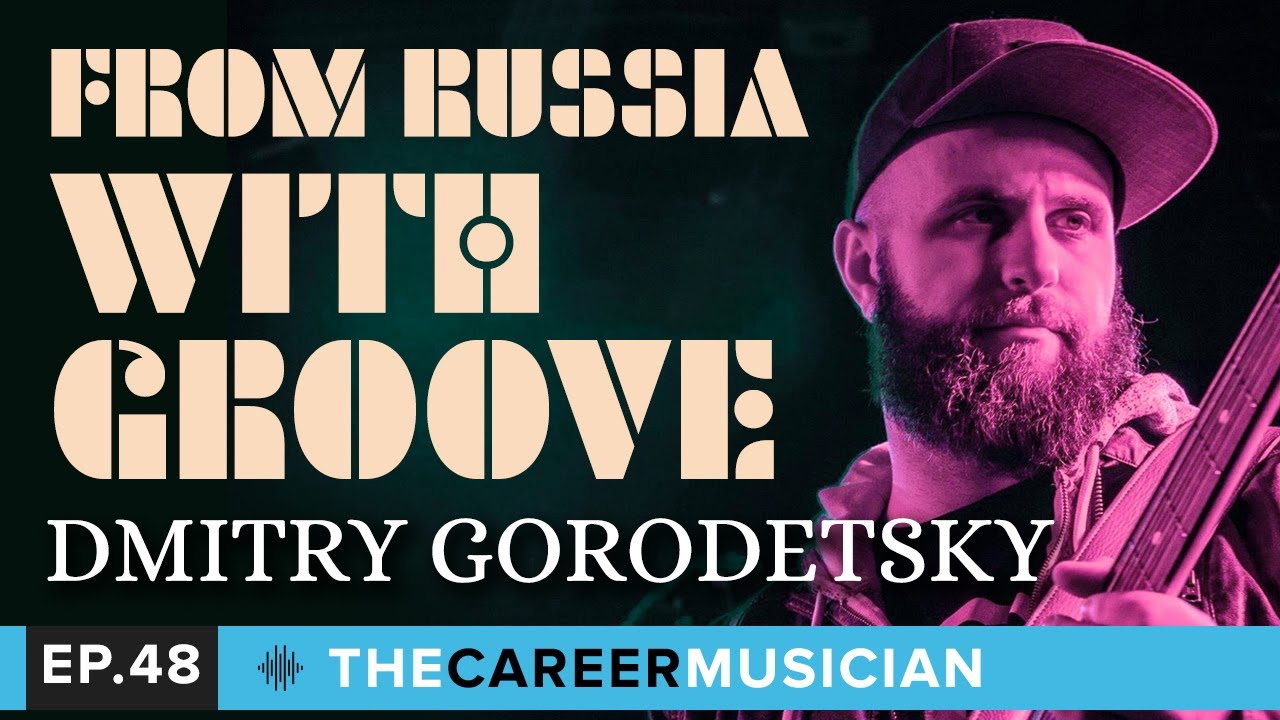
Dmitry Gorodetsky came to America from the Soviet Union at age 10, grew up gigging around Boston, spent ten years getting his butt kicked in New York, then drove across the country with his upright in the back of his truck. He is the bass player for Charlie Puth, and his credits run through 50 Cent, Wyclef Jean, Lauryn Hill, TLC, Eric Benét, Fantasia, Kenny Lattimore and Rita Ora.
In Episode 48 of The Career Musician, Dmitry and Nomad get into the side of the job nobody teaches: how a touring bassist conducts himself on the road, how to treat the crew, and how to negotiate your rate without blowing the gig. If you are a sideman, or want to be one, this is your episode.
It's not who you know, it's who knows you
Dmitry didn't go to music school. New York was his school, and he thinks it should be mandatory. Fakeness doesn't fly there. Cats will call you out for fluffing the changes in bar three, and he has seen players sent home from the bandstand in the middle of the gig. Ten years of that got him ready for LA.
When he arrived, he knew nobody and had no gig waiting. A friend connected him with a church, so he had a Sunday gig and a little seed money from day one, and that same friend introduced him around the West Coast. Nomad was clear that this is not about going out to shake hands with strangers. It is the network your life has already built.
"It's not even who you know, it's who knows you."
Dmitry Gorodetsky, 11:04
Dmitry's explanation: he can say he knows Nomad because they ran into each other at the supermarket. But if Nomad is in his studio and needs a bass line laid down, and he calls Dmitry, that is Nomad knowing him. Big difference.
Discipline is not a feeling
Dmitry's dad was a weekend warrior who played four or five instruments by ear, and the house was full of Ella Fitzgerald, Count Basie, Duke Ellington, Glenn Miller, the Beatles and the Stones. His first guitar was a tree branch strung with fishing line.
Then came classical piano with Russian teachers, and they did not care how old you were or how you felt about it. His point: over there, gymnasts, pianists and hockey players don't practice based on their feelings, and the West could use more of that. From 13 to 19 he put in eight to ten hours a day on the instrument. Principles never change. Methods evolve.
Trust the first take, and the road band
Dmitry walked through recent work: prerecorded live bass for Lil Nas X's "Old Town Road" medley at the Grammys, a Christmas record with Dionne Warwick, a track on John Legend's Christmas album, and music for a National Geographic series on Aretha Franklin produced by Raphael Saadiq.
Dionne Warwick was in the room every day, singing scratch vocals and producing. With her, you don't really get past take two. She wants your first instinct. Nomad agreed: trust your gut. The first take might have a clam in it because you are still learning the music, but the spirit is correct.
Charlie Puth is rare because he uses his road band in the studio. When he wants real string instruments instead of a sample library, he calls the guitar player and bass player he tours with. They tracked one record in the back of the bus on a day off in Kansas, just a DI out of Dmitry's road amp into Charlie's interface. Six months later it was on the charts. That is who knows you, again: if the vibe and the hang are right, why not have that cat lay it down? Nomad saw the same thing with Babyface, who called him for sessions throughout their years together. Work begets work.
You are not the artist
This was the heart of the episode. When Nomad asked about the proper code of conduct on tour, Dmitry started here.
"People will meet you and they'll be like, you're a rock star. I'm like, no, I work for one."
Dmitry Gorodetsky, 1:01:31
You are the support team. Your job is to make the artist look good, sound good and feel at ease so they can have the best performance of their life every night with no anxiety about the band. The hospitality is the cherry on top, not the point.
And these days, every show is recorded off the board, for the band, the artist, even a commercial that might need the audio. So it is like tracking every night, with no do-overs.
"If I make a single mistake, I tell myself I didn't really have a clean show."
Dmitry Gorodetsky, 1:04:35
That is Reliability beats virtuosity at the highest level. Offstage, judge yourself by the same standards as any professional office: on time, polite, no altercations. Somebody at a gate desk or an angry fan may push your buttons, and how you react is still on you. You don't want to be a liability to the camp. Get your paperwork in on time, and if there is a holdup, communicate, because the whole band might be waiting on yours before anyone gets paid. Low maintenance / no drama.
The whole camp is the band
After a show, Dmitry finds the front of house engineer and asks, "How was your show?" Not "did I sound good." How did that board and that PA treat you? Is my signal too hot? Does my reverb pedal mess you up down the chain? He thinks of front of house as another member of the band, because that engineer decides what the audience actually hears. The monitor engineer decides whether you hear the artist and the MD in your ears.
Nomad's advice: buy those people a drink, or take the crew to dinner now and then. It is not about the money, it is the gesture. Dmitry added: make friends with everybody, the carpenters, catering, merch, and especially the tour manager. When the tour manager texts or emails, answer right away. They are building the order in your life. Repeat business is how you live, and your reputation is what the street says about you.
Know your worth, and be willing to walk away
Negotiating was the question Dmitry called heavy and loaded, and he admitted there is no across-the-board answer. Some MDs say you should always ask about pay up front, politely. Say "what's the rate" or "what's the compensation," not "where's my money." But at the very top level, some MDs are offended you would even ask, because of course they pay premium. When he got a call like that recently, he phoned the person who had recommended him, who told him not to bring it up. You have to feel it out.
His approach: get an outside perspective. It is easy to see a friend's situation clearly and hard to see your own. Have a couple of trusted people you can call and ask if a number seems right. Don't undercut yourself, don't price yourself out of the gig, and never undercut a friend who told you their rate. Both men called that bad karma.
In the room, speak slowly. The person across the table negotiates for a living, and they may throw out a wildly low number just to watch how you react. If they ask "what's your rate," turn it around: what's the best the camp can do? And be ready to say "I'm sorry, I can't do it this time, I'd love to next time," and live with it. If you draw a line in the sand and then erase it, you are not standing your ground. That is Make Music Your Business.
The takeaway
Dmitry is the picture of a humble, prepared sideman: disciplined in the shed, clean every night on stage, good to every person in the camp, and clear-headed when it is time to talk money. That is why the calls keep coming from people who know him. If you want more on how to land and keep work like this, start with the free Get the Gig guide, and follow Dmitry at @tallbassist.
Get the gig. Keep the gig. Build the career.
Watch on YouTube or find every episode on the TCM Podcast page.
Your next step
If this episode lit something up, start with the free Get the Gig Guide. It is the career side of being a professional musician, the part nobody taught you.
Got an audition coming up? Grab Nomad’s Audition Secrets playbook, because everything you do is an audition.
And share this one with a musician who needs to hear it.
TCM listeners and readers get 20% off rehearsal studio time at PA Rehearsal Studios with code TCM20.