Drum Time: Frank “Third” Richardson on Becoming a Working Drummer People Call (Episode 30)
Reliability beats virtuosity.
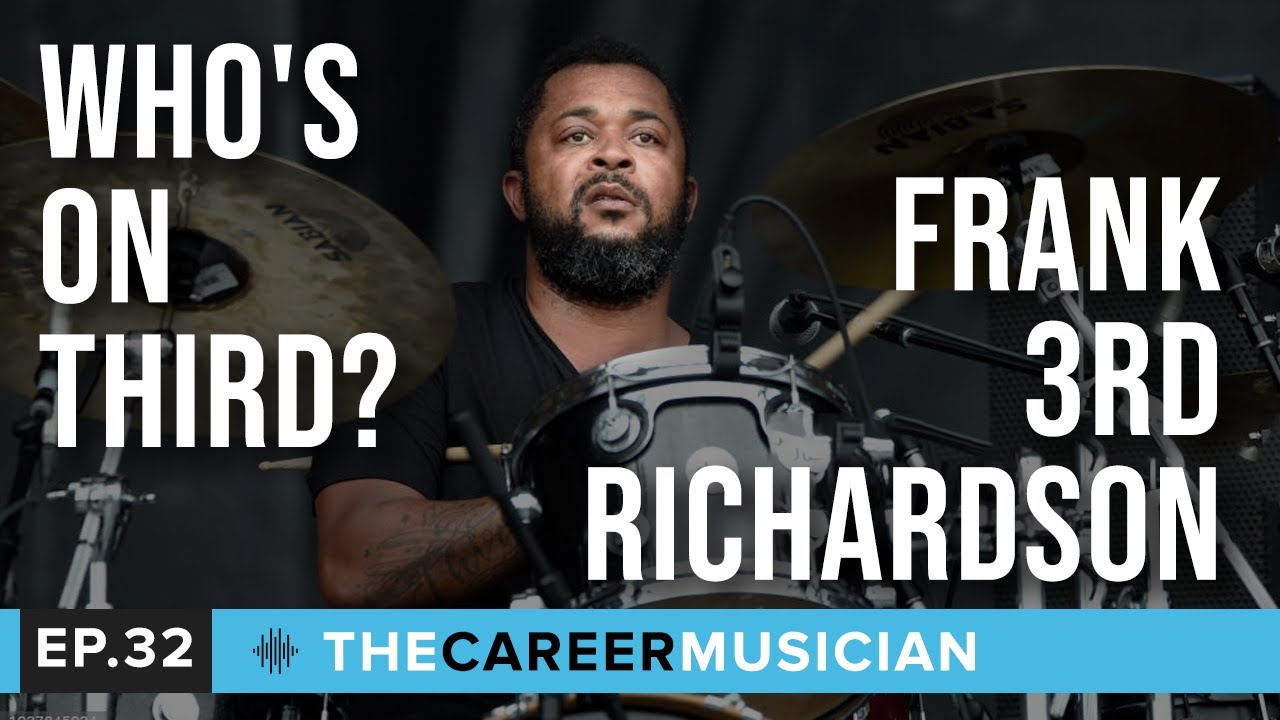
Frank Richardson goes by one name: Third. Nomad calls him one of the most chill dudes he knows, until he gets behind the kit. Then the groove pushes you out of your seat. He has played small clubs and sold out arenas around the globe, and at the time of this conversation he was drumming with Mindi Abair and The Boneshakers, whose album No Good Deed was climbing the Billboard blues chart.
In Episode 30 of The Career Musician, Third breaks down how a working drummer goes from an anonymous chair to a name people call: showing up, following up, playing the feel, and building a brand that is just you.
Learning to meet in the middle
Music ran in the family. His granddad played drums, and his dad played drums, guitar, bass and just about everything else. Third started on drums in his grandmother's church at three or four years old.
In high school he was the only freshman on the snare line, and by sophomore year he was section leader. He and the band instructor didn't always see eye to eye, but they met in the middle. Learning to understand someone else's vision and overall sound taught him work ethic and leadership, the same thing he brings to a gig with Nomad.
At 17 a local gig turned into a house gig, Thursday through Sunday brunch. He had to tell his band director he was leaving marching band. Wedding bands and smooth jazz gigs followed.
How to stop being a disposable chair
Nomad put the big question on the table. As a sideman you're anonymous. We call it the drum chair for a reason: a chair can be replaced. So how did Frank the little drummer become Third, someone who works with managers, agents and artists and books himself?
His answer: very carefully. Burn no bridges, number one. Be aggressive, go after it, but do it right. Let people know you're in the city. Sit in when you can. Shake hands. Have a personality. When someone says email me, go home and email them. Follow up. Keep your word. Then show up on time.
"Drum time is whatever time you tell me to be there. I need to be ready to play by that time."
Third Richardson, 12:24
If soundcheck is at two, he is tuned and ready to play at two. Nomad remembered a project where Third beat the music director to the gig. He also introduces himself to the backline tech. That is Reliability beats virtuosity, and because people pay attention to those details, everything you do is an audition.
It's called the music business
Nomad asked about invoices, because so many players either don't have one or wait days to send it. Third's answer was blunt: you can play music, but do you have a business? Get business cards, show up, do your taxes, send the invoice. That is Make Music Your Business.
Then the basics nobody should have to say: hygiene, look good, smell good, have your gear ready, and be happy to be there. If you just had a fight at home, leave it at the door. They gave you the music and the instructions. Learn the part, play it, get paid. That is Low maintenance / no drama.
Feel lives in the space
As a music director, Nomad doesn't always have time to remember every tempo, so he relies on his drummer to have it ready. Third treats the click as another instrument on the track, not something that controls him. It counts him in, and then his pulse is the one. He is listening to the shakers, the handclaps, where the backbeat sits and where the horn stabs fall.
He credits his feel to his pops, hanging with players like Randy Jacobs, and listening to different styles. Nomad pointed to the space between two and four in "Billie Jean." Space is where the funk lives.
Third separated the beat from the groove. The beat is where the kick, snare and hi-hat land. The groove is how it feels. A hi-hat pattern is on the record for a reason: it complements the guitar part and leaves room the producer laid in on purpose. Play that part with good feel and a good attitude, and you show the artist you paid attention to the record and to the email with the instructions.
Be you, and make it all one
Nomad asked what keeps him grounded. Third kept it simple.
"The same guy I am on the drum set is the same guy I am off the drum set."
Third Richardson, 24:12
He cares about everything, his relationships, his family, the money, the music, down to the hi-hat pattern. Nomad loved the name: there are a bajillion Franks in the world, but only one Third. That sets him apart. Third's advice on branding is to tie it all together, the name, the look, the sound, the socials, and be you. Stay in your lane, too: don't put cheap tires on a badass Mustang, and don't play fills out of your league.
Nomad added a note for players outside the big cities. Third is from Florida. You don't have to move to LA, Nashville or New York to build a career. Start where you are, build a platform at home, then springboard if you want. As Nomad put it, it's not based on talent alone. It's based on your skills as a human being.
Valleys test how much you want it
Third has had his low points, mostly financial: getting burned on pay, trying to budget his life on someone else's timing. He still follows up on money he is owed, because it's business. But he doesn't give that person power over his path.
"My vision and where I'm going is greater than that person that ain't paid me in three months."
Third Richardson, 32:24
The valleys come to test how much you really love this. When they hit, his advice is to stay with the source: who you were as a kid, before any of this, when you just wanted to play.
The takeaway
Burn no bridges. Follow up. Be ready to play at the time they give you. Send the invoice. Play the space, not just the notes, and be the same person on and off the stage. If you are working to turn sit-ins into calls, start with the free Get the Gig guide, and see Third's credits on Discogs.
Get the gig. Keep the gig. Build the career.
Watch on YouTube or find every episode on the TCM Podcast page.
Your next step
If this episode lit something up, start with the free Get the Gig Guide. It is the career side of being a professional musician, the part nobody taught you.
Got an audition coming up? Grab Nomad’s Audition Secrets playbook, because everything you do is an audition.
And share this one with a musician who needs to hear it.
TCM listeners and readers get 20% off rehearsal studio time at PA Rehearsal Studios with code TCM20.