Garrett Hope and Arthur Breur on Music Business for Musicians (Episode 155)
Make Music Your Business.
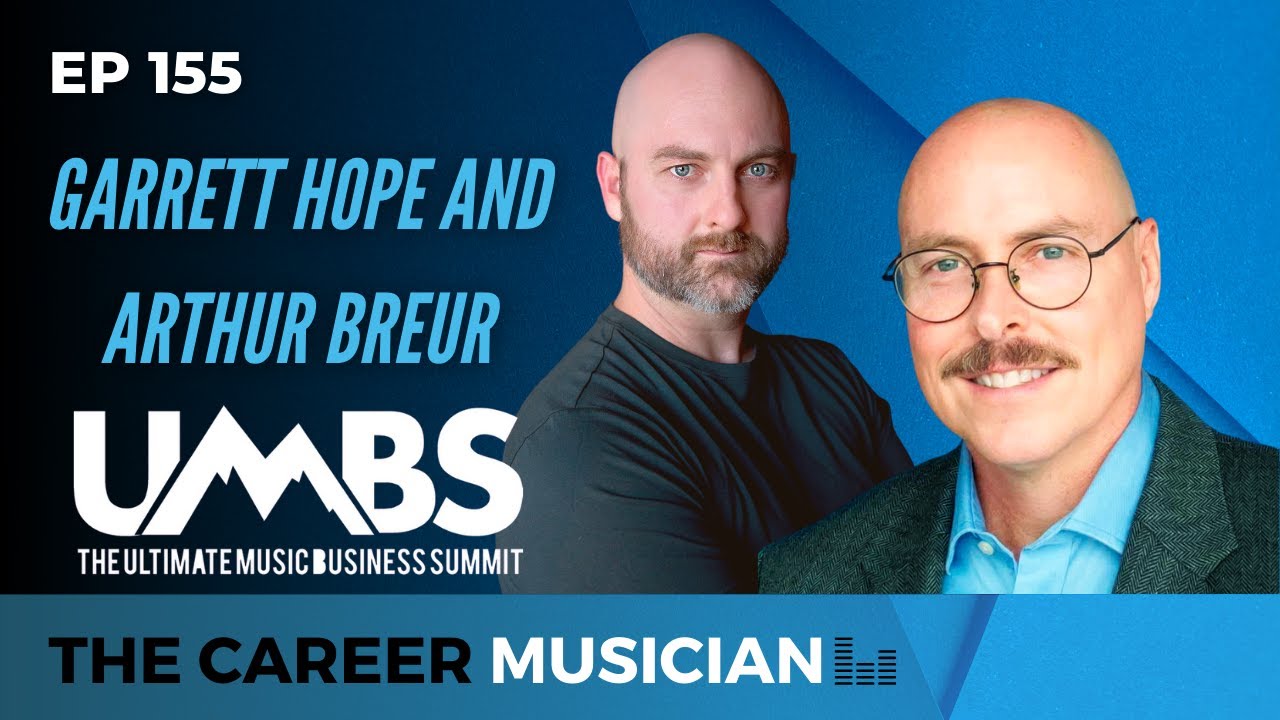
"The one thing not discussed in school is that you are a business." That line, from the Ultimate Music Business Summit's own pitch, sums up Episode 155 of The Career Musician. Nomad welcomes composers Garrett Hope and Arthur Breur, the team behind the summit, for a conversation packed with music business advice for musicians: networking, niche, elevator pitches, money and mindset.
Garrett has a doctorate in composition and taught as a university professor for 15 or 16 years. He calls himself a recovering academic and runs The Portfolio Composer podcast and coaching. Arthur studied piano performance and composition, built a career in graphic and web design, and then decided that if he called himself a composer, he had to start composing again. Nomad dropped an imaginary mic more than once.
Stop asking for permission
Garrett's turning point was simple. He called himself a composer, but he paid the bills by teaching. What would it take to pay the bills by writing music? The answer: realize you are a small business. Once he embraced that, everything changed. He stopped asking for permission and started creating his own opportunities.
Arthur took the same idea somewhere unexpected: his local Chamber of Commerce. He promoted himself there as a professional composer and started getting commissions right away. That led to his first orchestral premiere, his first concert band premiere, and composer in residence roles with local ensembles. It also led him to build a model at composerinresidence.org for no-cost residencies that benefit both the composer and the ensemble.
Network where you are the only musician
Nomad's favorite part: go where you will be one of very few music makers, not one of hundreds. Arthur adds why a business group works so well. It reminds you that you are a business, it gives you a safe place to practice networking and your elevator speech, and it connects you with people who can send you repeat work.
"Most people are hoping to only get married once. The people who are event planners are planning and hoping to get lots and lots of weddings."
Arthur Breur, 7:10
Network with the people who bring you multiple leads, not just one sale. Garrett adds a warning from the Midwest Clinic, the huge conference for school band and orchestra directors where they get booth space. Composer friends want to hang out and grab a drink. He loves them, but he is there to meet band directors. Focus means saying no to your friends sometimes.
Find your blue ocean
Garrett explains the blue ocean strategy. Sharks crowd where the fish are, and the water turns red. New businesses make the mistake of jumping into that red ocean. In a blue ocean, you can be the biggest shark in your part of the water. You can't out-Apple Apple. You have to differentiate.
When people describe themselves exactly like everyone else, they become one in a sea of sameness, and then why shouldn't a client hire the next person for half the price? Nomad calls this your unique sonic niche: be the specialist who gets called back for the one thing you do well.
An elevator pitch with a benefit
Arthur's advice: have your message ready in several sizes, five minutes, 30 seconds, 15 seconds, and a tagline of five to ten words. His is "music drawn from your heart." Make your handle easy to remember and spell, and have a website, even a simple one.
Garrett gives the formula: I do this thing, for these people, and they get this benefit. As a composer, he helps band directors teach better and create lifelong music lovers. As a church musician, he helps churches create transformative worship experiences.
"It's really important to include the benefit part, because otherwise you're just one amongst a sea of a bazillion others."
Garrett Hope, 17:43
"I play killer guitar" doesn't tell anyone why they should care. And money, Arthur says, is just gratitude: someone thanking you with something they can hold. Sales is simply telling people what you do and why they should hire you. It is not arrogant to say you are good at it.
Legitimize the business and wear the hats
Garrett's practical step: look in the mirror and say out loud, "I'm running a business." Get serious about the money side. If you get 1099s, the government already thinks you are a business. Track your write-offs, like strings, piano tuning and travel for gigs. Then learn marketing, copywriting, money and keep your chops up.
Arthur adds that the one-career, gold-watch world is gone. Gigging, teaching, recordings: build multiple income channels. That is The Biz pillar: diversify or die. Nomad sorts the hats into personal, business and creative, and shares his own rhythm: business in the morning until lunch, creative after.
Mindset: your words create your reality
The guests want you to drop negative talk about money and the "starving artist" story. One of them even hired a money coach to work through his own money issues. And the table recommends Steven Pressfield's The War of Art: if you have impostor syndrome, congratulations, you care about your work.
Garrett shares how he and his wife committed early in their marriage never to speak badly about each other to other people, and how choosing words that built her up changed how he saw her. Now apply that to your business, your bandmates and your money. Switch from scarcity to abundance, and you start seeing more opportunities.
Arthur cites a study on people who consider themselves lucky: they simply notice more opportunities. Nomad puts it in TCM terms: luck = preparation + opportunity. Their closing habits are simple. Garrett keeps a gratitude journal, ten things a day, without repeating yourself. Arthur texts a few people each night with what he succeeded at, learned, or did to help someone.
The takeaway
You are a business. Find your blue ocean, pitch the benefit, go where you stand out, and train your mindset daily. Then take action, because learning without action changes nothing. To put it into practice, start with the free Get the Gig guide.
Get the gig. Keep the gig. Build the career.
Watch on YouTube or find every episode on the TCM Podcast page.
Your next step
If this episode lit something up, start with the free Get the Gig Guide. It is the career side of being a professional musician, the part nobody taught you.
Got an audition coming up? Grab Nomad’s Audition Secrets playbook, because everything you do is an audition.
And share this one with a musician who needs to hear it.
TCM listeners and readers get 20% off rehearsal studio time at PA Rehearsal Studios with code TCM20.