Get Your Music Heard: Tito Daniel on Dash Radio and Sync (Episode 168)
Make Music Your Business.
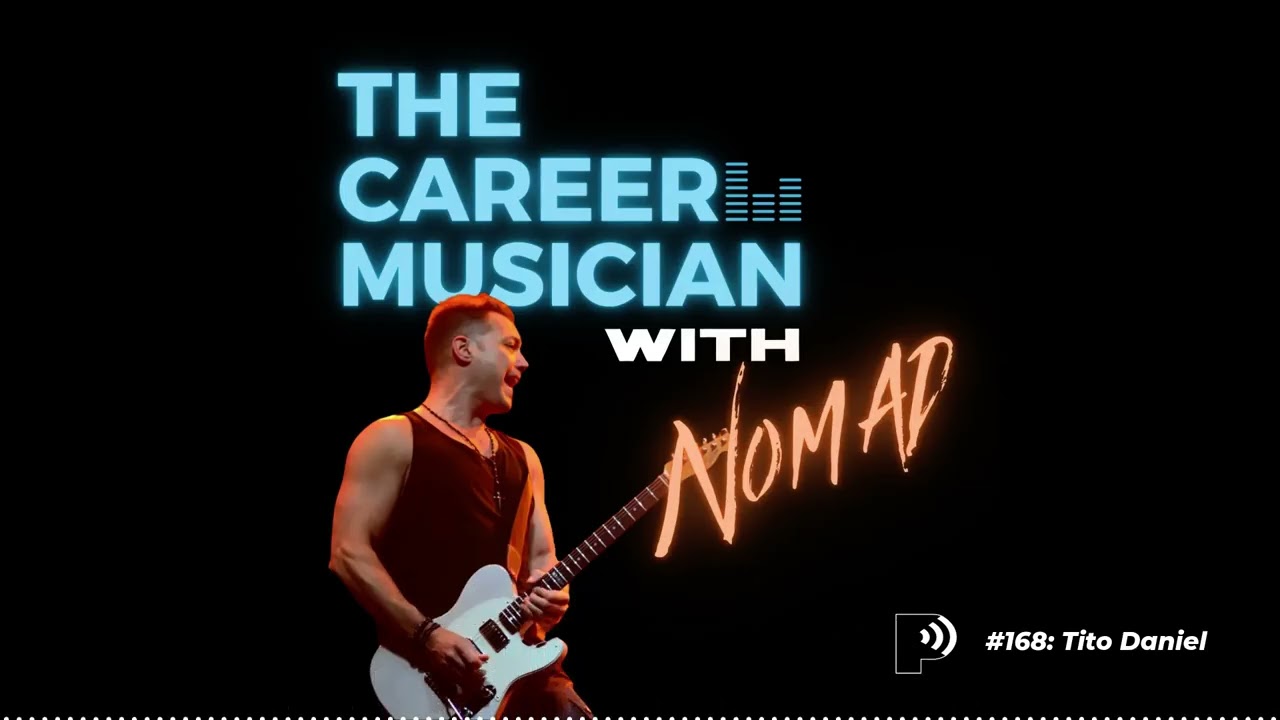
Is your music radio ready? In Episode 168 of The Career Musician, Nomad sits down with fellow career musician and composer Tito Daniel to walk through exactly how independent artists could submit songs for Radio Ready, The Career Musician's show on Dash Radio, powered by SmashHaus.
It is a hands-on, screen-share style episode about how to get your music heard. Along the way, the two of them get into sync licensing basics, exclusive versus non-exclusive deals, and a simple habit Nomad calls "submit and omit."
How the pieces fit together
Nomad lays out the chain. SmashHaus is, in his words, a global music industry job board that connects music makers directly with companies looking for music for TV, film, media, radio and work for hire. SmashHaus brokered a deal with Dash Radio for a set of shows, and The Career Musician's Radio Ready is one of them. That is why every submission runs through SmashHaus.
As Nomad explains it, SmashHaus doesn't take a commission on a sync deal you land through it. It earns from a monthly or annual membership instead. And the platform has tools to help you understand deals, including a pre-cleared catalog and a cue payment calculator. His advice to every music creator: study this stuff and learn how to leverage your catalog for the most placements and fees.
Three steps to submit
As described in the episode, the process is simple:
1. Go to The Career Musician Instagram and use the link in bio for song submissions. 2. Click "Submit Music" and create your free SmashHaus account. 3. Add two song links and wait for approval.
Make the links easy to play. Spotify, Apple Music and SoundCloud all work. A WeTransfer link means the listener has to download files, which is a hassle. If you use Dropbox, make sure it streams with no password. If your music isn't released yet, Nomad suggests SoundCloud, since you can post it without going through the full release process.
The hardest part? Waiting. Nomad says the team listens to everything, but they can get backed up. Be patient.
Submit and omit
This is the lesson that applies to every pitch you will ever send. When you answer a brief, submit exactly the way they ask. You probably won't get a confirmation. Then omit it from your brain.
"Submit your music... make sure that you did it exactly the way they say. Chances are you're not going to get a confirmation... And then omit. Omit it from your brain."
Nomad, 19:30
Nomad compares it to fishing with his dad in South Florida: three or four lines in the water instead of one means more chances. So submit to as many platforms and briefs as you can, and log every submission in a spreadsheet: date, platform, a link to the portal, which songs or cues you sent, and the contact. That log is what lets you forget about it and get back to making music.
It also saves you later. Tito asks what happens if two companies want the same song months later. Check the spreadsheet, then ask each one: is your deal exclusive or non-exclusive? If one wants three months exclusive and the other a one-off, you now have the power to decide. If both are non-exclusive and in very different territories, say a streaming show and a radio show, you may be able to do both. If they overlap, read the fine print. That is Savvy from the ETHOS code.
Your phone is full of cues
Tito admits his wife is better with lyrics and he is better with music. Nomad is the same. Then Tito makes the point: so many of us have voice memos full of ideas. What if you finished them? Nomad's suggestion: turn the best ideas into complete 60 to 90 second cues, two minutes tops, and upload them. To keep it from being overwhelming, eat the elephant one bite at a time. The table lands on a smart filter: work on the ideas from the same month in past years, finish those, then move on.
Tito also asks about big shows with a set composer, like Snuffy Walden on The West Wing. Nomad's answer: the score goes to the composer, but there is still source music and needle drops. If the scene needs ten seconds of gnarly death metal from a car radio and that is not the composer's thing, the production goes to its music providers. That is your opening.
Nobody is coming to make you a star
Nomad closes with real talk. Even after American Idol, big film scores and celebrity gigs, nobody ever told him they were going to make him a star. That was never the point.
"The reason why we become professional musicians, career musicians, is because we want to make money doing what we love."
Nomad, 32:51
You have more avenues to do that today than ever. Work begets work, and it starts with finishing the music and sending it out.
The takeaway
Finish your ideas, make your links easy to play, submit everywhere, log it, and let it go. If you want the career side laid out step by step, start with the free Get the Gig guide.
Get the gig. Keep the gig. Build the career.
Watch on YouTube or find every episode on the TCM Podcast page.
Your next step
If this episode lit something up, start with the free Get the Gig Guide. It is the career side of being a professional musician, the part nobody taught you.
Got an audition coming up? Grab Nomad’s Audition Secrets playbook, because everything you do is an audition.
And share this one with a musician who needs to hear it.
TCM listeners and readers get 20% off rehearsal studio time at PA Rehearsal Studios with code TCM20.