The Immediate Family: Russ Kunkel on How to Become a Session Musician (Episode 111)
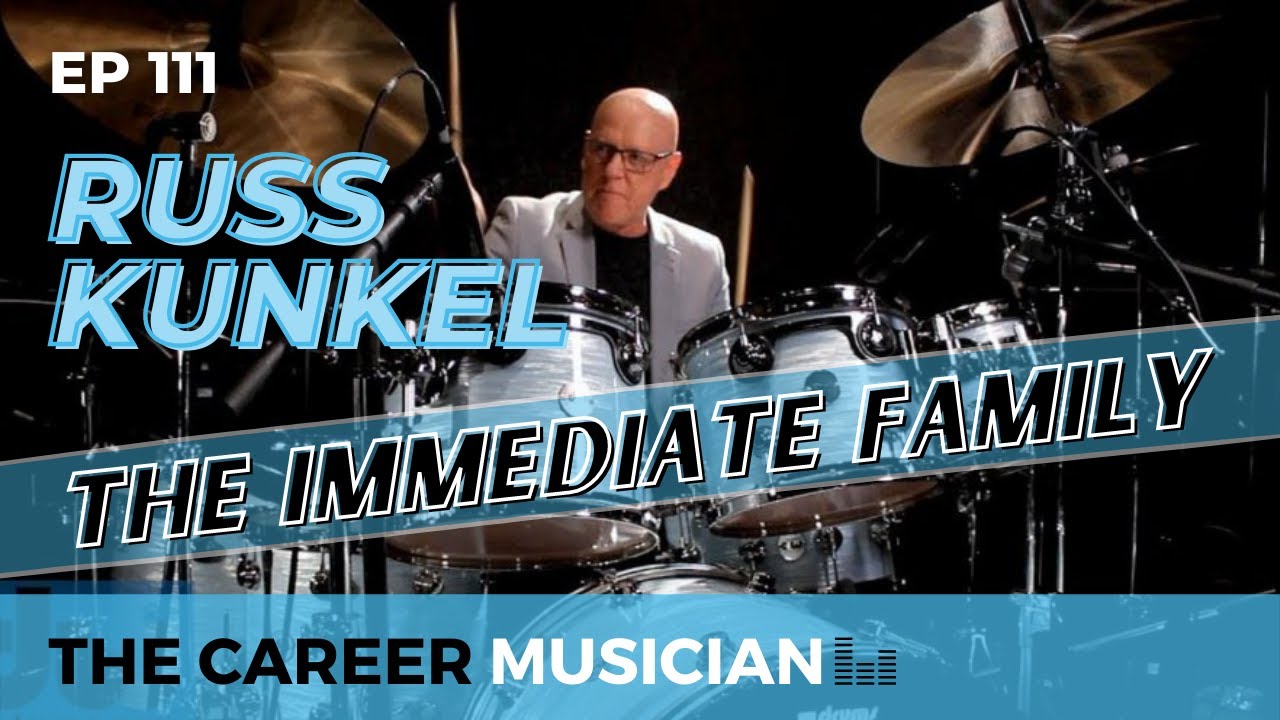
Everything you do is an audition.
Russ Kunkel's credit list reads like the history of the singer-songwriter era: Jackson Browne, Bob Dylan, Carole King, Linda Ronstadt, James Taylor, Stevie Nicks, Neil Young and many more. He was the studio and touring drummer for Crosby & Nash in the 1970s. Today he plays in The Immediate Family with the same circle of session legends he came up with.
In Episode 111 of The Career Musician, Nomad asked Russ how a session career like that actually gets built. His answer is the simplest studio musician advice you will ever hear, and the hardest to live up to: find out what's needed, deliver it, and do everything you can to get hired again.
A summer job that made the decision for him
The music bug bit in a few ways. His older brother was a drummer whose band rehearsed in the house. Then, the summer of his junior year in Long Beach, his mom told him to get a job. Three months at a gas station convinced him that was not the work he wanted for the rest of his life, so he threw himself into music full time.
The early gigs paid very little. Dances, car clubs, weddings, anything. By 1968 his band had a run of 19 weeks in a row at the Whisky a Go Go, opening for everybody, which put him in front of the LA scene. Publishing demo sessions came next, and through them he met the studio players who showed him how that world worked.
Do the best you can to get rehired
The break came when producer Peter Asher saw Russ at a rehearsal and hired him on the spot for James Taylor's Sweet Baby James. Everything was a domino effect after that.
"I was in the right place at the right time, I met some very influential people along the way, and I did the best I could to get rehired again."
Russ Kunkel, 3:38
His creed for studio work was simple: find out what is needed and wanted, and produce it. It is not your music and it is not your song. You are there to assist, a bit like the doctor's oath to first do no harm. Even on records that became classics, he said, he wasn't thinking about hits. Every time he left the studio, he just wanted to make sure he'd be called back.
That is the heart of Reliability beats virtuosity. The players who keep the gig are the ones who make the session better, not the ones who make it about themselves.
Music is about playing with other people
Russ had a warning for younger players who mostly make music alone for their channels. Showing off your own chops is fine, and online exposure is a real opportunity. But if you never learn what it is to be a part of something instead of the only part, you will fall behind, because no one will want to play with you.
"If you don't play with other people and you don't start to understand what it's like to be a part of something, as opposed to being the only part, you're going to fall behind, because no one's going to want to play with you."
Russ Kunkel, 6:16
That ties to the TCM view of relationships. Nomad pointed out that so much work comes from well-cultivated relationships, and that networking shouldn't feel like networking. It should feel like natural life. For Russ, his friendship with Peter Asher shaped not just his career but the careers of his whole circle. Work begets work.
The answer is always yes
Nomad brought up one of his guitar heroes, the late session great Tommy Tedesco, who taught that when the producer asks if you can do something, the answer is yes. Russ told a story he heard from bassist Leland Sklar: on a session, a producer asked Tommy for mandolin, then for a 12-string. Each time Tommy ducked behind the baffle as if grabbing another instrument, came back up and nailed it. All he had was one acoustic guitar. He just changed positions and fingerings.
Russ was honest about his own stretch areas. He reads, but he is not a great sight reader, so when he knows charts are coming he gets to the studio early to scope out the tough bits. Luck = preparation + opportunity.
Balance the road and the people at home
Russ spent most of his life on the road, and in the studio when he wasn't. He said he paid a price for it in some relationships, and if he did it again, he probably wouldn't tour as much. His advice: if your plan is to work as much as you possibly can, stay single, so nobody is depending on your presence. Today his wife Shauna supports his career and reminds him when it's time for balance.
He also reminded Nomad that no one does this alone. A manager can only do as much as you're willing to do first. If you are out there promoting yourself and doing good work, they can help. They can't create a gig out of thin air.
The takeaway
Russ's advice for young players: find like-minded people who play different instruments, form a band and play as much as you possibly can. Write songs if you can. And above all, be good, not just in your own eyes but in the eyes of your worst critics. Then show up to serve the song and earn the call back. If you have an audition coming up, prepare with the free Audition Secrets guide.
Get the gig. Keep the gig. Build the career.
Watch on YouTube or find every episode on the TCM Podcast page.
Your next step
If this episode lit something up, start with the free Get the Gig Guide. It is the career side of being a professional musician, the part nobody taught you.
Got an audition coming up? Grab Nomad’s Audition Secrets playbook, because everything you do is an audition.
And share this one with a musician who needs to hear it.
TCM listeners and readers get 20% off rehearsal studio time at PA Rehearsal Studios with code TCM20.