Say Yes, Then Back It Up: Jason Hartless on How to Become a Session Drummer (Episode 61)
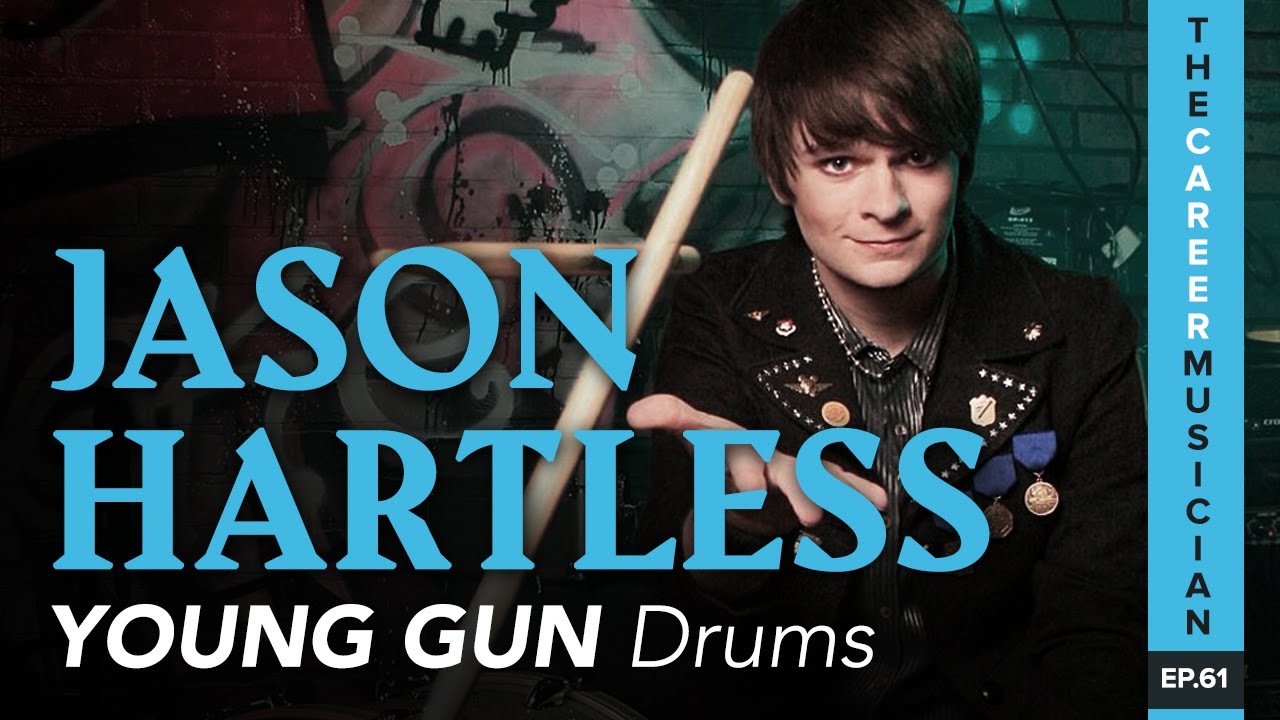
Everything you do is an audition.
Nomad opened Episode 61 of The Career Musician by saying he was enamored with his guest before they ever hit record. Not because of the gigs, though there were plenty. Because of the emails. Jason Hartless, the 25-year-old drummer holding down the drum chair for Ted Nugent, was a clear communicator, followed up on time, did what he said he would do, and had a website where every link worked.
That is where this story starts, and it is the whole point. Jason has been a working touring and session drummer since he was 12. If you are a young player trying to figure out how to become a session drummer and keep a touring career going, this is the episode. Here is what stood out.
Learn the business before anyone hands you the gig
Jason's father was a drummer, and he never really focused on teaching Jason how to play. What he taught was the business side: a professional attitude, and how you talk to fellow musicians, clients, artists and producers.
Jason sees his own generation leaning on social media to get their name out, then losing the plot on communication. A business email written like a text, with "lol" and quick little acronyms, is not a professional way of handling yourself. Every message you send a manager or producer is part of how they decide whether to call you. Everything you do is an audition.
That business foundation led him to a music business degree at Berklee online, with a master's in music business lined up right after.
Say yes, then figure it out
Jason grew up on his dad's glam rock records and listens to everything, because in his words you have to be the guy that just says yes. Can you play reggae? Yes. Death metal? Yes. That is how you get gigs, and how you keep getting them. He once finished a run with Joe Lynn Turner of Rainbow and Deep Purple, flew from St. Louis straight home to Detroit, and went from the airport to the studio to cut a big band Christmas album with some of Bob Seger's horn section.
Nomad had his own version. A producer in Nashville asked him mid-session if he played ukulele. He said yes. He didn't own one. He went home, bought a ukulele and a chord book, came back the next day and played it on a Lilo and Stitch direct-to-DVD release.
"Trust your gut, don't trust your brain. A lot of times your brain might say, well, I don't know how to do this. But if you're a competent enough musician, you're a confident enough musician, you can figure it out."
Jason Hartless, 10:00
Nomad pushed on the line between confidence and arrogance, and Jason drew it cleanly. Confidence is when you can back up every single thing you say. Ego is building hype that does not exist. In the studio, that gap shows up fast: walk in boasting, fail in the live room, and you are not getting called back.
Studio etiquette: serve the producer and the song
Jason's first studio session was at eight years old. His godfather sent a video of him playing "Nantucket Sleighride" to Corky Laing of Mountain, and Corky spent the next two years driving down from Toronto to work on a record with him. It was really an excuse to teach a kid how to be a professional in a studio.
At ten, he watched Anton Fig come up from a Letterman taping, listen to songs he had never heard, chart them, then call Jason over to show him how he writes his charts. Two tracks, two perfect takes. That was the moment Jason knew he wanted to be a studio player.
His approach now is simple. Listen to whoever hired you. Give your opinion if they ask for it, but at the end of the day the producer and the artist have to be happy. He doesn't like hearing tracks before a session, because unless a producer sends detailed notes, you never know exactly what they want. So he asks, right down to whether they want a crazy fill or a simple one, and makes sure what he plays fits the song. He also made the case for real rooms: a home setup is good for demos, but for a record he tracks drums in a proper studio, because it makes him sound and look a lot better.
Know what you don't know
At 14, Jason spent three months opening amphitheaters on Mötley Crüe's Crüe Fest 2 tour, with his dad along as tour manager. The tour ended two days before high school started. Then he did not make the ninth grade jazz band, because he couldn't read music.
Instead of sulking, he called it what it was: he was a rock drummer, and he needed to become a musician. He started weekly lessons focused on rudiments, technique and snare work, and joined every ensemble he could, from jazz band and symphonic band to drumline and the show choir. He also ran the high school theater's 48-channel digital console, and yes, he learned it by downloading the manual and getting it printed. Nomad loved that part: intuition only gets you so far, and then you have to study.
Work begets work
Jason's touring career started with a last-minute call. He was home sick from school when guitarist Brian Schram's drummer couldn't make a recording session in Toronto, so his mom drove him up. A couple of months later, the drummer couldn't make a show opening for Les Claypool in Milwaukee. Jason got the call the day before, did the show, and was asked to join the next day.
The Nugent gig came the same way. His later band opened for Ted Nugent for two and a half months in 2014, and he stayed in touch with management and people in the camp. When that band fell apart because members decided they hated touring, he sent emails to people in the industry saying he was available the next summer. One went to Ted's manager, who wrote back asking if he could do a Nugent set. Ted called two days later, they talked Detroit music and what Ted wants in a drummer, and Jason flew to Waco, Texas to jam. When they talked, he was in his fifth year in the band.
Work begets work. Every one of those calls came from somebody who had already seen him deliver, or who got a clear, professional email at the right time.
Build something that outlasts the drum chair
Jason chose music business over performance on purpose. His question was what he would do if the calls stopped, or if he broke his hand: not a fallback, but something he could use during his career and after it. He picked Berklee online over moving to Boston, and about three weeks later he got the call for Ted Nugent. Luck = preparation + opportunity.
He studies on the road in hotel rooms between two-and-a-half-hour sets. He also became a managing partner in a small label that had a catalog sitting with distribution and nobody working it, and turned it into a vinyl reissue operation. One project he was excited about: the Detroit band Chad Smith played in before the Red Hot Chili Peppers. He gets to use real label work as his homework, because he hates hypothetical situations. When he is home in Detroit, he also teaches at School of Rock.
The takeaway
Jason's advice for anyone his age or younger was one sentence.
"Be the guy that can just do it all. Be the guy that can play any style of music, be the guy that can do whatever gig possible, because that's how you're gonna stay working."
Jason Hartless, 1:00:08
Communicate like a pro. Say yes and back it up. Know what you don't know, and go learn it. Build the business side while the gigs are good. That is Make Music Your Business. If you want the playbook for landing your next call, start with the free Get the Gig guide, and check out more from Jason at jasonhartless.com.
Get the gig. Keep the gig. Build the career.
Watch on YouTube or find every episode on the TCM Podcast page.
Your next step
If this episode lit something up, start with the free Get the Gig Guide. It is the career side of being a professional musician, the part nobody taught you.
Got an audition coming up? Grab Nomad’s Audition Secrets playbook, because everything you do is an audition.
And share this one with a musician who needs to hear it.
TCM listeners and readers get 20% off rehearsal studio time at PA Rehearsal Studios with code TCM20.