Treat Your Music Like It Matters: Jason Moss on Music Licensing for Musicians (Episode 10)
Make Music Your Business.
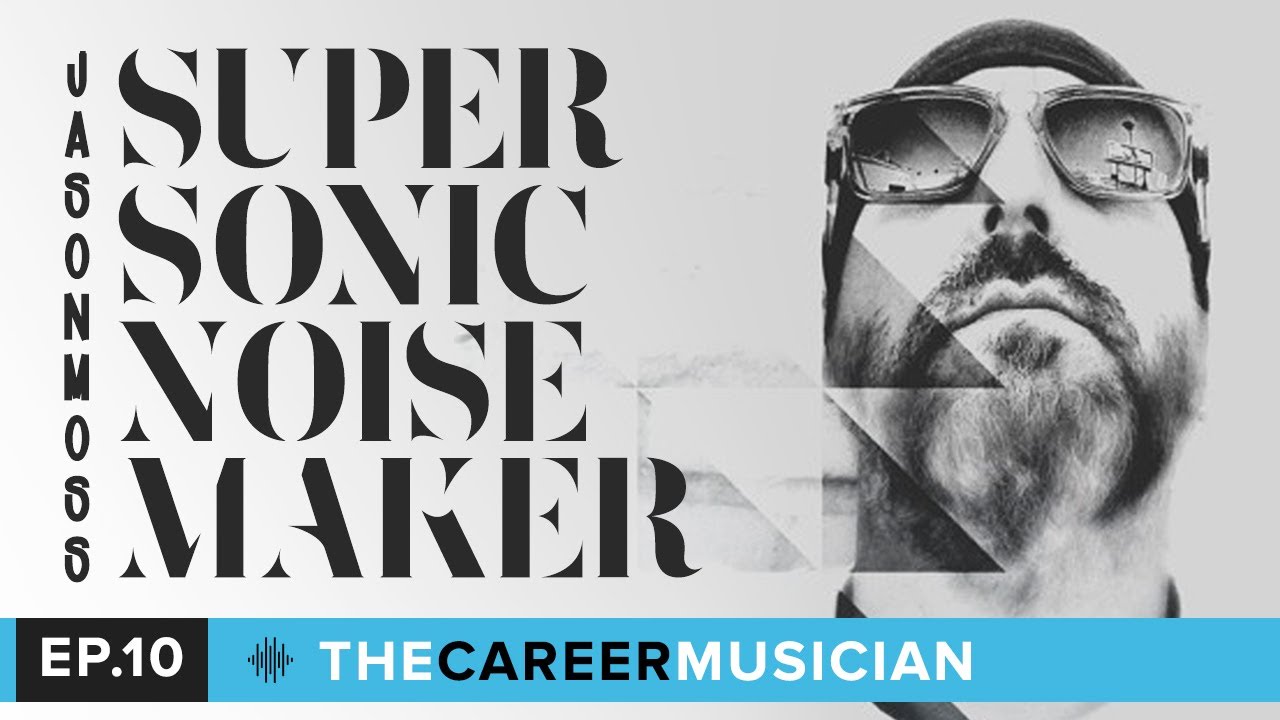
Jason Moss is a guitarist, songwriter, composer and producer, and he is also a music business guy. In Episode 10 of The Career Musician, Nomad sat down with him at the brick-and-mortar Nomad's Place in Burbank. As Nomad introduced him, Jason runs Supersonic Noise, a boutique production music library in Los Angeles, and co-founded a licensing company that also handles music supervision, production and consulting.
This is the episode to bookmark if you want to understand music licensing for musicians: publishing versus writer's share, work for hire versus sync splits, cue sheets, and why your royalties take years to show up. It is also a conversation about diversity, balance and treating your music with respect.
Put yourself in the middle of things
Jason grew up in New Jersey, spent part of his teens in Caracas, Venezuela, and sold guitars at Sam Ash while trying to break into jingles in New York and still be a rock star. Then he decided to be a big fish in a smaller pond and moved to Phoenix.
There he landed at an educational TV network, and his first job had nothing to do with music. It was 1996, and they hired him to find websites the network needed to block. Then he saw an opening. They needed children's songs, so he offered to write them. Then they needed documentary underscore. He kept putting himself in the middle, while also doing commercials for local clients on the side. Three or four years later he was the network's music director, and he says he had about 20 jobs there.
Nomad's view on that: diversity is key to success and longevity in this business. Take stock of the skills you have, and see where you can diversify. Work begets work, and Jason's career is a chain of small yeses that turned into a title.
Surround yourself with better people
Jason calls himself a Ramones three-chord punk kid, an ear player who doesn't read or write music. His philosophy is to surround himself with people more talented than he is.
Play tennis with a better tennis player and you become a better tennis player. Collaborating with keyboard players, orchestral and jazz players, or a guitarist with a different background gives the music depth he wouldn't get on his own. No ego, just learning from smart people.
He doesn't procrastinate, and these days he values balance, because balance feeds his creativity. Studio essentials? A great set of monitors and a great chair. Beyond that, he said, all the technology means nothing if you can't write a beautiful melody and put three or four pretty chords together.
There are no trade secrets
When Jason was coming up, a mentor composer showed him the ropes, took him along to sessions in LA with top studio players and later produced his album. That generosity shaped how Jason works.
"There's no trade secrets... it's really a game of people liking you, feeling like you can show up, feel like you communicate effectively. You're not an artist brooding in your corner."
Jason Moss, 26:53
Be articulate, be responsible, and create effectively and quickly. Nomad put it his own way: there are enough chestnuts to go around, so there's no reason to guard yours. That is Low maintenance / no drama, and it is how you keep getting called.
Treat your music with respect
Jason doesn't like how often musicians are asked to work for free. You have to decide which yeses are smart business decisions and which to turn down. His blunt image: you can treat your music with love and respect, or you can sell it out to anyone for a buck.
He doesn't do retitling, and his deals are exclusive. He will still do something for free if the people and the project are right, but if they won't pay or won't treat the gig the way it should be treated, he says no. His advice to young composers and artists: take pride in your art, and if you are writing for someone's film, educate yourself on licensing, publishing and the PROs (ASCAP, BMI and SESAC), or you are going to get burned.
Music publishing explained, Jason's way
Jason is not an attorney, and said so. Here is his breakdown.
Every piece of music has two sides, like a coin: the writer's share and the publishing share. If you own your publishing, you are steering the car. If you sign a work for hire agreement, you give up that publishing share and someone else steers, usually for an upfront fee. You should always try to keep 100% of your writer's share. Splitting it 50/50 when you ghostwrite for a composer on a show can be legit. A production library that takes half of your writer's share is not, in his opinion.
"If you own your publishing... then you're basically steering your car in the direction you want it to go."
Jason Moss, 35:04
Then there is the sync fee, the license fee a client pays to use a track. On a sync split deal with no upfront money, the writer and the library split that fee, so if a track never gets placed, nobody earns. On a work for hire, the writer gets paid up front, keeps the writer's share, and still earns writer royalties every time the music airs. Jason's own library mostly does work for hire, and he said he would rather under-promise than oversell, because there is no guarantee when a track gets used.
Every time music plays in a show, it lands on a cue sheet with the timing, the composer and the publisher. That goes to the PROs, which calculate what to pay. Broadcast generally pays far more than streaming, and the time slot, ratings and type of cue all matter. Statements are full of small lines: $2.36 here, 15 cents there. They add up, but it takes a year, two years, three years for things to get into the system and into your pocket.
His last word on the money: get somebody in your corner who knows contracts, and spend the money to have things looked at. If you can't afford an attorney, do your due diligence, research, go to mixers and industry events, and ask people for help.
The marathon and the follow-up
Nomad was blunt about networking.
"At the end of the day, if you're not networking, chances are you're not working."
Nomad, 39:43
Jason's version is the last man standing. If you can push through the hard times, and you have talent, drive and passion, and you're pleasant to be around, you are going to last. Even now he is still hustling: reaching out to showrunners and producers, hearing "we're good for now," and putting a reminder on his calendar to check back in a month or two. Keep notes on who you called and what was said. And when you are staring at an email wondering if you are being a pain, just hit send and ask what you can do for them.
His biggest early win came from a freelance pitch against a pile of other composers. He wrote a theme that ran as a broadcast TV commercial and radio spot, and it did so well that the money helped him buy a condo when he was young. That led to a long relationship with the music company behind the pitch and a "permalance" staff seat, where he got to pitch on everything and sit in on the briefs. Being on the inside, hearing the client directly, gave him a much better shot at nailing it. Relationships, he said, are the pot of gold at the end of the rainbow. Luck = preparation + opportunity, and Jason kept preparing for years before that one pitch landed.
The takeaway
Nomad summed it up in three words: diversity, balance and self-education. Learn as many sides of the craft as you can, keep your life balanced so the creativity keeps flowing, and learn how publishing and licensing work before you sign anything. As Jason put it, Rome wasn't built in a day. If you want a head start on landing the next opportunity, grab the free Get the Gig guide.
Get the gig. Keep the gig. Build the career.
Watch on YouTube or find every episode on the TCM Podcast page.
Your next step
If this episode lit something up, start with the free Get the Gig Guide. It is the career side of being a professional musician, the part nobody taught you.
Got an audition coming up? Grab Nomad’s Audition Secrets playbook, because everything you do is an audition.
And share this one with a musician who needs to hear it.
TCM listeners and readers get 20% off rehearsal studio time at PA Rehearsal Studios with code TCM20.