Play the One Note That Matters: Joe Augello on How to Negotiate as a Session Guitarist (Episode 64)
You learned how to make music. Nobody taught you how to make a living making music.
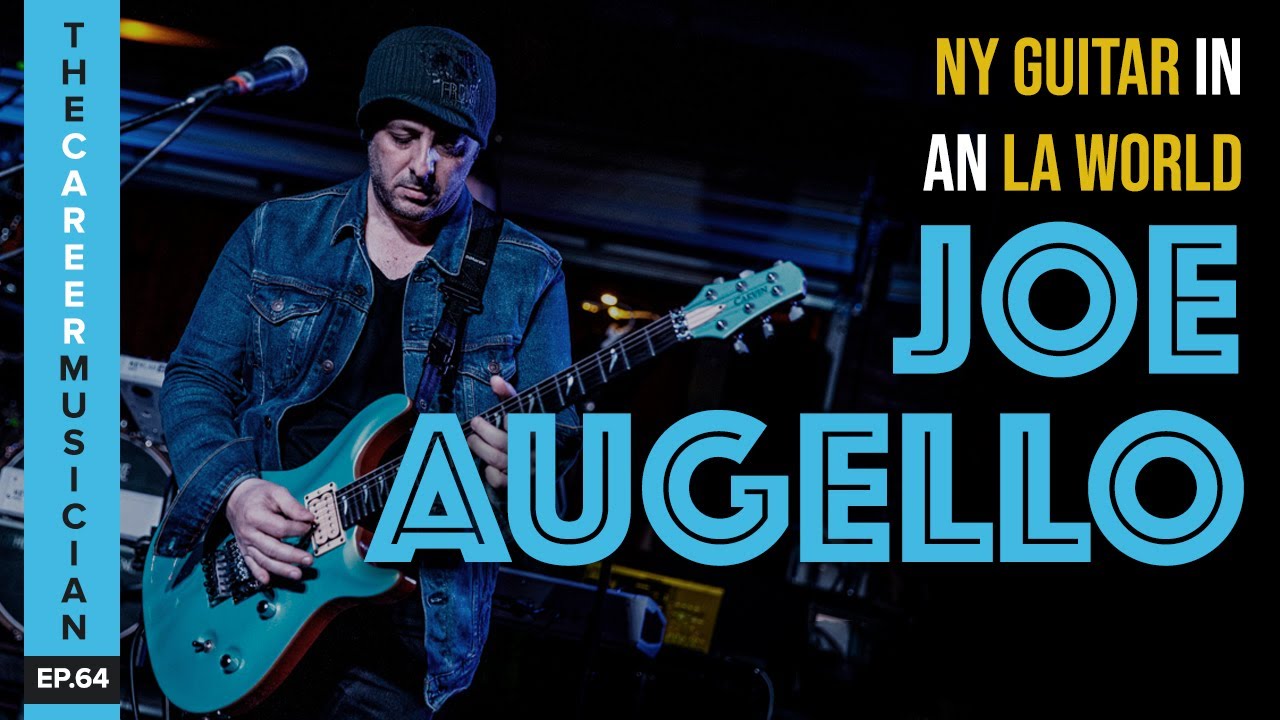
Nomad and Joe Augello met in Los Angeles and found out they had everything in common: both Italian, both guitar players from Long Island, both around the same age, both raised on the same guitar heroes. Joe has worked as a studio and touring guitarist for Robin Thicke, Jennifer Hudson, the Backstreet Boys and Israel Houghton. In Episode 64 of The Career Musician, the two of them talk riffs, tone, life as a sideman and how to negotiate as a session guitarist.
Here is what stood out.
Learn from the riff masters
Joe's first concert was supposed to be Elvis. Elvis died six days before the show, so a couple of weeks later, at four years old, Joe saw Glen Campbell at Belmont Racetrack, met him, and asked if he knew Elvis. Joe's dad was an audiophile, and the house was like a record store: Elvis, the Beatles, doo-wop, country, Motown, and a Black Sabbath record that scared him.
The Bee Gees were the first music that really got him. Those chord changes tugged at his heart before he knew what a major ninth was, and he still calls their songs the bible of modern songwriting. Then came Chic, Nile Rodgers and the Jacksons at the roller rink. He couldn't play chords yet, so he picked out the single-note parts on a cheap acoustic with sky-high action. Anything with a riff in it, he could learn.
Nomad's point: they grew up on the riff masters, when songs were guitar driven and the parts were smart. Learn those parts and you learn arranging, not just licks.
Simple and effective beats a shredfest
Joe was deep into Steve Vai when he went off to music school, and the day he arrived was the day "Smells Like Teen Spirit" came out. Overnight, everything he had practiced became exactly what not to do. He spent his twenties a little lost, trying to be a jazz guy.
Then he went to see Prince, alone, with a front row seat. Prince walked up, played one note, and it changed how Joe thought about the guitar. He didn't want to be a bebop player. He wanted to play one note and watch 20,000 people go nuts.
"It's a lot harder to play something simple but make it really effective, than to play a crazy shredfest and have it just go over everybody's head."
Joe Augello, 24:08
That epiphany let him take everything he loved and meld it into his own tone. Nomad put it in his own words: methods and techniques change, but principles never do.
"You have to develop your own voice and you have to be unapologetic about it."
Joe Augello, 26:12
Joe's warning for younger players is content versus connection. When he came up, if you wanted to play with someone, you had to show up and ask, with some reverence. He used to go to a college teacher's gigs and just sit there, soaking it in, watching the brilliance come out when the guy played with other people. Learn from the greats, then take what moves you and make it your own. Not faster. Yours.
Know your volume, know your role
Joe has been with Robin Thicke for about ten years. Years back, he and Nomad were rehearsing next door to each other at Center Staging, Nomad with Babyface, and Joe told Nomad his guitar was loud for a legendary R&B act. Nomad took it as a compliment, then got serious about stage volume.
If you're not the front person, you have to be sensitive to everybody on stage and to what the principal artist wants. Bass, drums, guitar, keys, vocals, it doesn't matter. That's Low maintenance / no drama, and it's how you keep the gig.
His road kit is just as practical. One guitar in a gig bag stuffed with in-ears, picks and the essentials. A pedalboard in a flight case under 50 pounds, checked. An overnight roller bag. And his iPod, because that's his sanity.
It's somebody else's vision
When Nomad asked when to say no, Joe was honest. A lot of it comes down to money. Before you take something, ask yourself two things: will I be happy doing it, and once I accept this rate, will I always be that guy?
"As a sideman, it's not our dream, it's not our vision. It's somebody else's vision, and you have to accept that."
Joe Augello, 35:26
Getting let go, or not getting picked, is what you signed up for. That's Humility. And nobody is safe. There have always been monster players out there. Social media just makes them visible. Somebody eventually beat Mike Tyson.
How to negotiate as a sideman
The answer to that pressure is self-worth: the wisdom and confidence you build over time. Joe never talks money with the artist, only management. He wants everything laid out before he accepts anything, he keeps his numbers in his head, and he shoots high, because it usually comes down from there.
He has also been on the other end. After a successful first-album tour, an artist's camp came back for the second record and offered half. In any other job, putting in time gets you a raise. Know your worth, know the artist's worth, and look at what else is on the table besides the money.
Nomad added the line that sums it up: you're not really in a position to negotiate until you're willing to walk away from the gig. If all you're doing is lowering your price, that isn't negotiating, it's giving in. That's Make Music Your Business.
The takeaway
Learn the riffs that built the songs you love. Play the one note that matters. Find your own voice and don't apologize for it. On stage, serve the artist's vision. Off stage, know your number and know when you'll walk. If you are working toward your next call, grab the free Get the Gig guide, and follow Joe on Instagram.
Get the gig. Keep the gig. Build the career.
Watch on YouTube or find every episode on the TCM Podcast page.
Your next step
If this episode lit something up, start with the free Get the Gig Guide. It is the career side of being a professional musician, the part nobody taught you.
Got an audition coming up? Grab Nomad’s Audition Secrets playbook, because everything you do is an audition.
And share this one with a musician who needs to hear it.
TCM listeners and readers get 20% off rehearsal studio time at PA Rehearsal Studios with code TCM20.