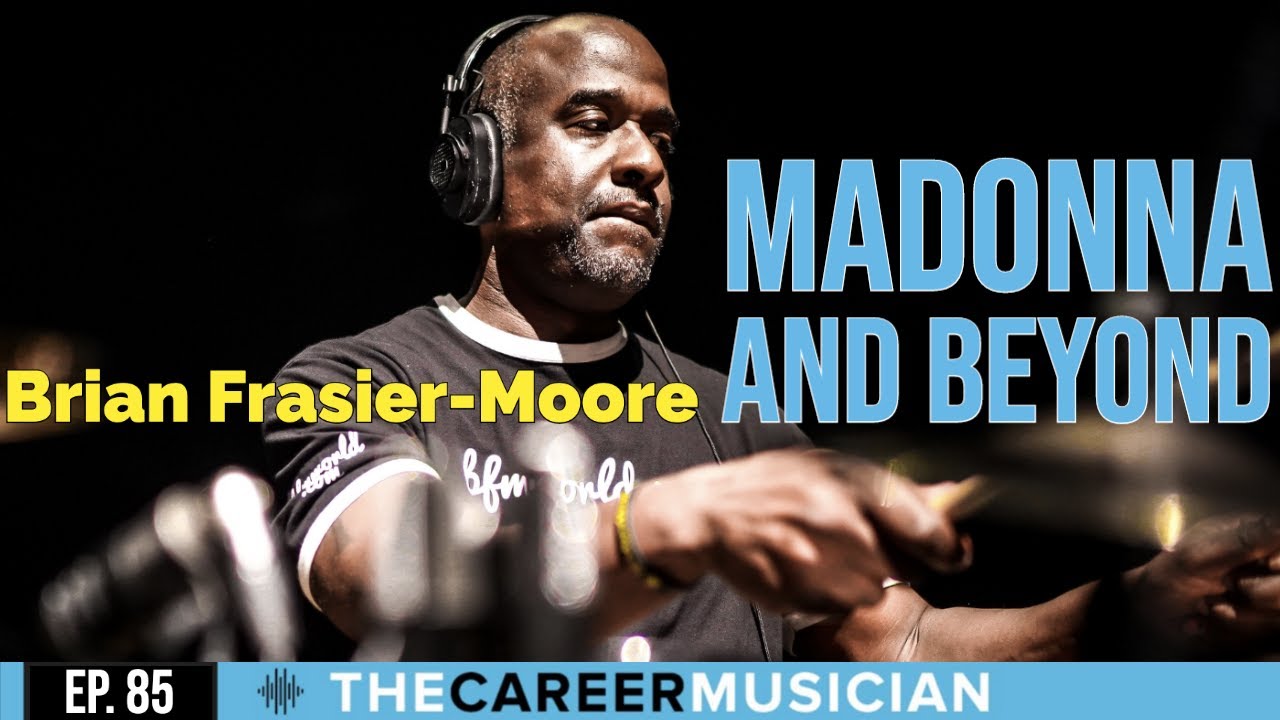
Madonna and Beyond: Brian Frasier-Moore on the Business of Drumming (Episode 85)
Everything you do is an audition.
Brian Frasier-Moore has played drums behind a list of artists that reads like a who's who: Aaliyah, Ginuwine, Ciara, Janet Jackson, Patti LaBelle, Babyface, Justin Timberlake, Christina Aguilera, Usher and Madonna. He also has his own signature snare drum. In Episode 85 of The Career Musician, he and Nomad, old bandmates from the Babyface camp, talk about the side of the drum chair nobody sees from the audience.
This one is a masterclass in the music business for drummers and every other side player: how to ask for a gig, how endorsements really work, and why Brian approaches his career as a business person first.
Confidence, but the researched kind
Brian grew up in Philadelphia, worked his way through Atlanta and landed on the West Coast, and he has been touring for more than 26 years. The foundation under all of it is confidence. Not false confidence. Research-enriched confidence.
"I'm nervous all the time... But then I just think about, okay, I know how to feel music, I know what this artist wants, I know what I'm trying to paint. I have all the tools, I know the road map."
Brian Frasier-Moore, 8:33
He doesn't lean on his resume to calm the nerves, either. What he did in the past only goes so far. You still have to show and prove. For high-pressure rooms, he says the playing is not the hard part. The psychological part is. He talks himself through it: I'm here, I'm in this position, and if I ever want to be here again I have to conquer this.
Don't ask for the kiss before the date
Young players ask Brian all the time to hook them up with a gig. His answer is blunt and funny: that's like asking for a kiss without taking her out first. It is not about being selfish. People in those chairs know the gig is not just playing. It is long rehearsals, pay cuts you find out about late, and keeping your cool while all of that goes on in the background. Recommending someone who isn't ready is throwing them to the wolves.
So meet him halfway. In a world where you can post a video and tag anyone, show him something.
"So then I will take that confidence that you gave me and I'll go to my connection and say, hey, I know this guy can do that, instead of showing me nothing and asking for everything."
Brian Frasier-Moore, 14:20
Play a song. Make it feel good. Keep the authenticity of the record. Show that your drums sound great and that you can tune them. Brian also owned up to his own early temper: he once went off on a gig, was technically right, and a manager watching from the side decided he didn't want that guy around anymore. Low maintenance / no drama. That lesson is cheaper to learn from his story than from your own.
Prepare for the artist, not just the instrument
Brian remembers telling Nomad in a hotel elevator in Japan that he thought he had just gotten the Madonna call. Babyface gave him his blessing, and so did the drummer who held the chair before him. Then the real preparation started.
Madonna was at rehearsal every day, six days a week, working the band in the first half of the day before the recordings went to the dancers. She has detailed ears for sonics: electric kick with an acoustic snare, triggered hi-hats, combinations he had to build on the spot. Brian walked in thinking drums and triggers. He quickly realized she is a world artist who might go from a dance track to an acoustic tune with guitar and percussion. So he called every company he worked with and asked for djembe, bongos, congas and more, promising to send back anything he didn't use. Only after rehearsals showed what they actually needed did they finish the rack.
That same detail goes into a TV spot date. Before he plays a three-minute award show segment, he has confirmed which kit the backline company is sending, which triggers are in that city, and built his own trigger sounds from the record so the song is authentic. Luck = preparation + opportunity. Brian just does more of the preparation part than most.
And he never forgets the crew. He names his techs in interviews and magazine features because, as he puts it, he can't do anything without them. They are the first ones in the venue and the last ones out.
Endorsements are a business deal, not a reward
This is the section to bookmark. Brian has had a long list of gear deals, and he says the biggest misconception is that skill level equals free gear.
"This is a business. They're a business. They need something out of the deal. And even though that gear is given to you for free, there's a price tag on that somewhere inside that company."
Brian Frasier-Moore, 32:00
What makes a company want you? Know their gear better than the rep expects. Build a real relationship. Promote the gear so people can hear how it sounds. Brian once walked into a company feeling himself and asked to be put on payroll. The rep told him, kindly, that fans don't rush to buy the kit they saw on the Madonna tour. It changed his whole perspective. He didn't stop hustling, but he dropped the entitlement.
Then he showed what thinking like a business looks like. Knowing the artist royalty on a signature snare is not a large number, he asked his drum company, Pearl, for a distributor deal instead. His company, BFM World, is incorporated and has a seller's permit, so he sells the snare through his own site and takes a distributor's percentage while the company ships it. Nomad's verdict: you didn't handle that like a musician, you handled that like a businessman. Make Music Your Business.
Know your worth and keep money talk private
Brian learned management the hard way: going in wrong, getting cursed out, getting refused. Now every ask is thought out and fact-based, framed around what benefits the team. When a manager asks "what do you want?", you had better have an answer, because stumbling on that question costs you. Do your research, and if you have people you can call in confidence, call them.
Nomad added his golden rule: never talk about money with anybody except your business manager and your spouse. Brian has an alter ego for those calls, and he discovered late that his own drums, cases, triggers, heads and sticks are part of a complete package someone should be paying for.
Two more pro habits from Brian. When he had to sub out of a Justin Timberlake tour to get married, he spent about a month walking his sub through 42 patches and every trigger change, because he wants the sub to win and the account to win. And when he turns down a gig, he gives a fact-based reason, never a personal one, and often brings a prepared replacement. That's Reliability beats virtuosity at the business level.
Be a team player in the marathon rehearsal
When sound checks drag, Brian catches himself comparing his musicality to everyone else's, then switches to team mode: he waits for his brother to get his part, and they wait for him. As an MD, he picks players he doesn't have to worry about, then becomes the liaison who keeps the band fresh while the artist works. Nomad's version: build a strong rapport with the production manager, and when the stage isn't ready at band call, repurpose the time for something constructive.
The takeaway
Brian's closing advice is for anyone with a voice inside saying "I can't do it because I'm not that type of musician." You can. Research the style, spend time with yourself, give yourself time, and don't quit early. Learn every lane, from reading charts to film and commercial work. If you are working toward your own big audition, the free Audition Secrets guide is a good place to start, and you can find more from Brian at BFM World.
Get the gig. Keep the gig. Build the career.
Watch on YouTube or find every episode on the TCM Podcast page.
Your next step
If this episode lit something up, start with the free Get the Gig Guide. It is the career side of being a professional musician, the part nobody taught you.
Got an audition coming up? Grab Nomad’s Audition Secrets playbook, because everything you do is an audition.
And share this one with a musician who needs to hear it.
TCM listeners and readers get 20% off rehearsal studio time at PA Rehearsal Studios with code TCM20.