Ralph T. Lofton on the Career of a Gospel B3 Organist (Episode 148)
Reliability beats virtuosity.
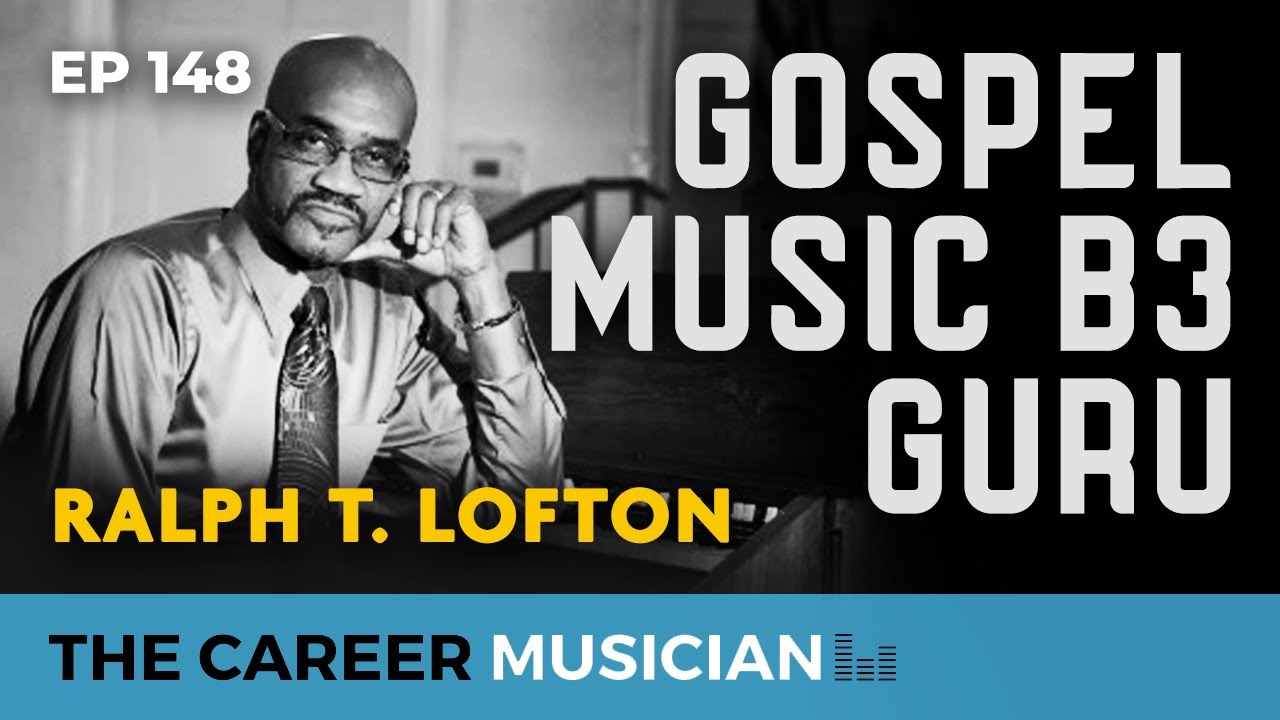
Some players you hire for their chops. Some you hire because the record isn't right until they touch it. In Episode 148 of The Career Musician, Nomad reconnects with an old friend from his Nashville days: Ralph T. Lofton, gospel music's B3 guru. Per the show notes, Ralph played Hammond organ and keys for Bobby Jones Gospel on BET for twelve years, toured with BeBe and CeCe Winans, and has backed Whitney Houston, Stevie Wonder, Luther Vandross, Aretha Franklin and Walter Hawkins. He also plays organ for Kirk Whalum.
It is a long, warm conversation about the life of a session organist, gospel harmony, discipline, building your own business, and a testimony at the end you won't forget. If you want to understand what it takes to be a session musician who keeps getting called, this is a masterclass.
Your own sound keeps you working
Ralph has been in Nashville since 1984. The first time he looked himself up on AllMusic, he says, it blew his mind: he had no idea how many records he had played on. Many of them came from being the call when another organ part wasn't working. A producer would say the organ is all right, but I need you to make it right. Nomad compares it to the specialist in a mob movie: the fixer who walks in with a briefcase and gets the job done.
The secret isn't a secret. Ralph has used the same drawbar settings since he was 15. People always ask for them, and he tells them they are nothing different from what anybody else uses. It is the technique God blessed him with.
"I know so many different players that play so much better than I do. I have what God has blessed me with to do, which is my own sound."
Ralph T. Lofton, 18:41
He can't be the other great B3 players he loves, and he doesn't try. Nomad, known as the acoustic guitar guy, relates completely: hone in on what you are gifted at, specialize, and you can build a whole career on it.
"If you're not being you, who else is going to be you?"
Ralph T. Lofton, 20:45
Live and studio are different jobs
Ralph wants younger players to hear this: knowing your instrument doesn't automatically make you a studio player or a live player. Don't get mad if nobody calls you for sessions. What you do still has value. If you want sessions, Nomad adds, figure out how to network with the people who do them. Don't take it personally.
And today, the studio is often your home. Ralph was cutting a single with all live players, each recording from their own studio. Because they are pros, they know how to adjust at home and deliver. Have your setup dialed in, he says, or they will go to the next person.
It started with a Sunday school surprise
Ralph had no interest in playing until age nine. At the historic First Baptist Church on Beale Street in Memphis, the Sunday school superintendent called him to the piano out of the blue. He said he didn't play. She said come anyway, and play along if you feel led. They sang "Jesus, Keep Me Near the Cross," and he put his hands on the keys and found the chords. His latest piano project includes that song, with a thank-you to her.
Lessons followed (until a teacher who rapped his knuckles with a ruler), then trombone in school band, which taught him to read. He learned from serious jazz and gospel organists around Memphis and a mentor whose big, wide vocal voicings reminded Nomad of Take 6. That is where Ralph started to understand fifths, sevenths, ninths and thirteenths, and how to fatten chords on organ with both hands over the bass pedals.
He also shares a humbling story. At a big church convention in Memphis when he was about 12, he got his shot on the organ and someone told him he had a phone call in the back. The phone was on the hook. He got the message. A year later he came back, got on the organ again, and this time the leader told the other musicians to go find a seat: this young man was staying. All he needed to do, he realized, was practice. Luck = preparation + opportunity.
Learn the hymns anyway
Ralph and Nomad touch on gospel history, from Thomas A. Dorsey in the traditional era to Andrae Crouch bringing it into the contemporary era. Then Ralph gets practical. For anyone who didn't grow up in church, he recommends the National Baptist Hymnal, which now includes newer songs like Richard Smallwood's "Total Praise."
Some younger keyboard players say they don't need hymns because their church doesn't sing them. Ralph's warning: someday someone will ask you to play one at an event, and if you never learned it, you are embarrassed. Nomad compares it to a jazz player who won't learn standards. Everything you do is an audition, including the request you didn't see coming.
Discipline on TV and in the church
Twelve years on a TV show taught Ralph the most about discipline. Be patient, because hurry up and wait is real. Know a huge variety of music, because every artist is different. Read charts, learn songs on the spot, and handle quick stage changes and personalities. The reading made it possible to stop staring at the chart and make it feel good.
As a church music director, the same lesson applies. You serve the pastor, the musicians and the singers (divas included) and a whole congregation, not your own taste. At one large Nashville church, he ran what Nomad calls mini concerts several times a week. In time, everyone from the youngest to the oldest called him Uncle Ralph. He earned their respect by doing his job and choosing music that related to everybody. That is low maintenance / no drama as a leadership style.
Nomad shares his own rule from more than a decade as Babyface's music director: make it easy and safe for the artist. Excuses don't exist. And on money, Ralph says your rate comes from your resume. You can't play for a year and ask a star for a top fee before you've learned the first song.
Build your own house
Ralph founded Raph'Ton Music Enterprises (per the show notes: publishing entities, a label, a consulting firm and a future school of the arts) after a realization around 2005.
"I gave my talents away for so long that when I came home there was nothing left for me."
Ralph T. Lofton, 1:21:42
Nomad sums it up: you were building everybody else's house with your bricks. Ralph's vow for his instrumental projects was to make a living, but never make money the focus. His instrumental path grew from the Quiet Time Players, a hymns project that earned Dove and Stellar nominations, per the show notes. His goal now is to develop new artists that record companies overlook. That is The Biz pillar: diversify or die.
Success, and a second chance
How does Ralph define success? A reputation across genres, so that when your name comes up, people respect you, trust you, and know you will make a difference on the project. And having something to show for a life of hard work.
Then the testimony. After years of congestive heart failure, Ralph blacked out and fell off the organ during a church service in 2017. Within weeks he was on the transplant list, and that November he received a new heart. He has also survived prostate cancer. He holds up two stuffed hearts signed by the nurses and doctors who cared for him. Nomad, who lost his father to heart failure the year before, is speechless.
Ralph's advice to young musicians: seek your purpose, don't jump into things just because they look good, and be well-rounded. Being a church musician doesn't mean you can only play one kind of music. Be versatile enough to bring something to any genre.
The takeaway
Find your sound, learn the repertoire, keep the discipline, and build your own house while you build everyone else's. Make the music to uplift people. When you are ready for your next call, prepare with the free Audition Secrets guide.
Get the gig. Keep the gig. Build the career.
Watch on YouTube or find every episode on the TCM Podcast page.
Your next step
If this episode lit something up, start with the free Get the Gig Guide. It is the career side of being a professional musician, the part nobody taught you.
Got an audition coming up? Grab Nomad’s Audition Secrets playbook, because everything you do is an audition.
And share this one with a musician who needs to hear it.
TCM listeners and readers get 20% off rehearsal studio time at PA Rehearsal Studios with code TCM20.