Real World Guitar: Rob Garland on Building a Guitar Career (Episode 193)
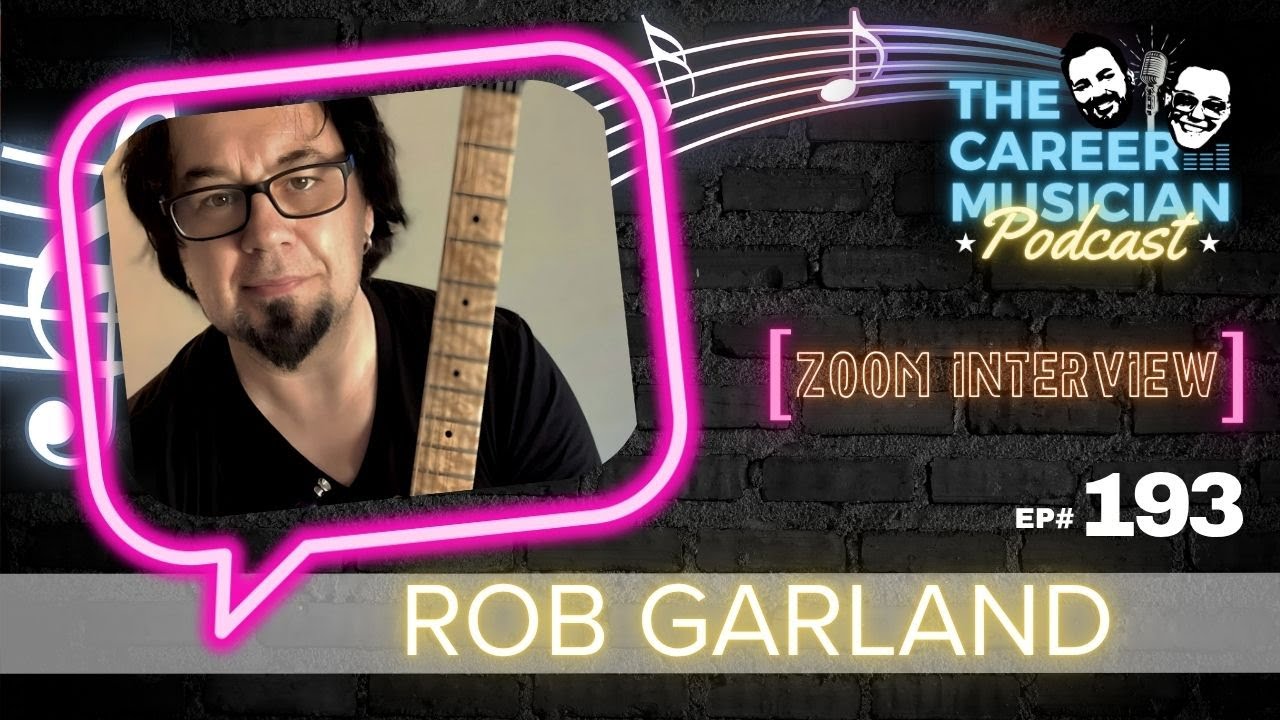
Everything you do is an audition.
Rob Garland didn't decide to become a career musician. He just never did anything else. In Episode 193 of The Career Musician, Nomad sits down with the guitarist behind Real World Guitar, a 30-year session and touring veteran whose path runs from a small seaside town in England to the Los Angeles club scene. Along the way: soul bands, a blues trio playing hundreds of gigs, years of teaching, instructional courses, books, and interviews with heroes like Steve Vai and Dweezil Zappa.
If you want to build a sustainable guitar career, this is a blueprint: persistence over perfection, diversified income, careful planning and a voice of your own.
Preparation is the landing
Before the interview, Nomad and TCM co-host Joel Meza check in while Joel heads to a country cover gig, a "working man's gig" that fills in between bigger paychecks. They are prepping the house band for the Hollywood Music in Media Awards, where Joel is drummer, playback engineer and assistant production manager.
Joel's advice for a first high-pressure show: preparation. Like a pilot, the approach is what makes the landing easy. Answer emails fast, communicate clearly, and walk in ready. He also never planned to run playback rigs. He found he loved it, and it became a skill set that opens doors. Follow what excites you, and it becomes part of your voice.
Persistence over perfection
Nomad met Rob handing out giant TCM guitar picks outside a hotel at NAMM. Rob asked to be on the show, then kept following up. Persistent, never obnoxious. That is exactly how he landed his interviews too. Some guests he knew from Musicians Institute, where he taught for about five or six years. Others took polite, repeated asks and a pitch that the interview would be different from what is already out there.
"If you email someone and they don't email you back, don't leave it there."
Rob Garland, 41:04
Rob says all of his endorsements came from meetings at NAMM, and some took three NAMMs to land. Growing up in England, self-promotion didn't come naturally. So he treats NAMM like a gig and steps into a slightly more confident persona for the day. As Nomad points out, most musicians have no agent or manager. You represent yourself, so learning to advocate without sounding salesy is part of the job. That is Savvy.
Diversify or die
Rob has always had two or three bands going in different styles: a hard rock band and an acoustic duo, a jazz rock band and a blues power trio. In the US, his first gig was a 12-piece soul band where he didn't take a solo for a year and a half. He chose gigs that would build something his playing lacked, like the 16th notes, syncopation and muting a rock player's right hand never needed.
He has taught since university in the mid-90s, sometimes 40 students at a time, made instructional courses and books, and now runs his own course company while writing and releasing his own music.
"I couldn't be a career musician unless I'd done books, courses, teaching, session."
Rob Garland, 26:03
At MI he made it his mission to open up students who arrived saying "I'm a metal guy." By the time they left, some were taking jazz gigs or discovering they liked Latin music or country. They didn't have to stop being metal players. Those other genres just made their own music better. Diversify or Die is not only about income. It is about your ears.
Do the homework nobody pays you for
Rob's advice for auditions is simple and old-school. They sent you seven songs? Know them inside and out. Know your part and the other parts. Nomad adds: learn the rest of their catalog. If they see ten players that day, you will be the one who knew the whole show.
And yes, you won't get paid for that time. Rob reminds friends in other industries that he can spend a year on a book with nothing up front, or rehearse for free with a band because he wants to. That unpaid work sharpens you for whatever comes next. He also pushes students to transcribe by ear before reaching for tabs. Learning it slightly wrong is how you start sounding like you.
On attitude: don't take a lost audition personally. Sometimes the gig goes to a friend of a friend. Be early, be kind, and don't be a drag.
"Music is a gift and it's a joy to be able to do it. So don't turn up as if you're paying your taxes."
Rob Garland, 1:19:26
Nomad shared why it matters. He once got a call to audition for Christina Aguilera. That audition got pushed, and the music director asked if he wanted to audition for Babyface instead. He worked with Babyface for 12 years. People are always watching how you act and react. Everything you do is an audition.
Plan the move before you move
Rob came to the US on a fiance visa, couldn't work for the first few months, and spent that time on his playing. Then came a temporary work permit and a long green card process. About 10 or 11 months in, his paperwork was lost and he had to start over, fees included.
Whether he was moving cities in England or moving to America, he spent about three months beforehand answering "guitarist wanted" ads and setting up auditions. Moving states? Get on Craigslist and musician listing sites months ahead. Want students? Put cards up in coffee shops, libraries and music stores, and keep your ads fresh.
He landed in St. Louis first, where his blues trio played around 220 gigs a year, many of them four-hour shows, and got onto blues society festival bills alongside B.B. King. Rob booked the gigs, built the website and drove the van. Years earlier in England he had been buying board tapes from The Baked Potato. Now he plays there.
Timing, and your own voice
In the mid-2000s Rob finally sent a studio-quality record to Mike Varney, the label head who discovered so many guitar heroes. The answer: if you had sent this ten years earlier, I would have signed you. Timing is everything. Pay attention to where the industry is going.
What lasts is a sound that is yours. Rob pointed to Guthrie Govan, who can play anyone's style and still sounds like Guthrie. Nomad calls it your unique sonic identity. Neither of them ever played covers note for note. Both of them have even avoided learning certain heroes' parts so the mystery stays.
They also agreed on this: music should never be a competitive sport. The greats enjoy other great musicians.
The takeaway
Rob calls his career a mix of dedication and stubbornness: I'm going to find a way to play the guitar, and that's it. Follow up without being a pest. Build several income lanes. Do the homework before anyone pays you. Plan your next move months ahead. And keep working toward a sound that is only yours. Prepping for your next one? Start with the free Audition Secrets guide.
Get the gig. Keep the gig. Build the career.
Watch on YouTube or find every episode on the TCM Podcast page.
Your next step
If this episode lit something up, start with the free Get the Gig Guide. It is the career side of being a professional musician, the part nobody taught you.
Got an audition coming up? Grab Nomad’s Audition Secrets playbook, because everything you do is an audition.
And share this one with a musician who needs to hear it.
TCM listeners and readers get 20% off rehearsal studio time at PA Rehearsal Studios with code TCM20.