Scott Frankfurt on Studio Life, Many Hats and the Heart Behind the Gear (Episode 140)
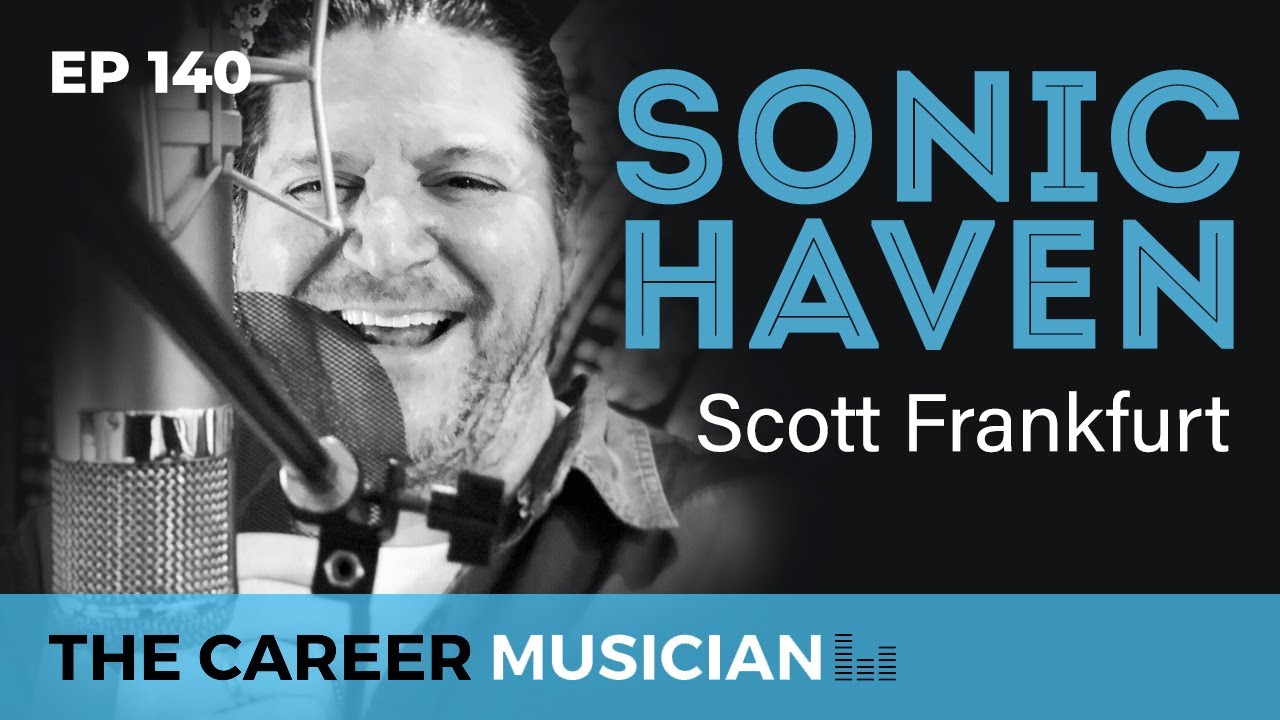
Everything you do is an audition.
Scott Frankfurt runs Scott Frankfurt Studio (SFS) in Woodland Hills, a room that can track up to 28 musicians at once and has hosted Earth, Wind & Fire, Janelle Monáe, John Legend and Sergio Mendes. Before that, he was a drummer, songwriter, synth programmer and, for 13 years, VP of Design at Spectrasonics.
In Episode 140, Scott walks Nomad through a career built on many hats, and the habits that make a recording studio worth coming back to. It starts somewhere Nomad didn't expect: with the heart, not the gear.
The gear is tools. The ear and the heart do the work
Hand a great tool to a craftsman and they get a result someone with less experience can't. Scott's point is that nobody listening cares what you used. They care whether it moved them, and whether the artist got a lifelong idea through production and into someone else's heart.
"It is the ear and it's the heart. That's more than the gear. The gear is tools."
Scott Frankfurt, 2:53
So when you walk up with your mic and preamp of choice, bring some humility. It is a technical job, but the most important part is being in sync with what the room is trying to accomplish that day.
Meet new tools with curiosity, not fear
Scott found the drums at 13, when he heard a hi-hat for the first time and his "DNA rearranged." His teacher Nick Vincent steered him toward studio groovers like Jeff Porcaro and Steve Gadd, and in high school he carpooled for three years with a young Dave Koz.
When drum machines arrived, he went down to Local 47 to help run a seminar for union drummers who were petrified of losing their work. His message: you are the best people to program these things. Nomad parked on that. You can get defensive and bitter, or you can do your own research and take the initiative. Scott called the first one a fear-based mentality. Just because everyone can buy a tool doesn't mean everyone can use it. That is Savvy from the ETHOS code.
One training trip, one patch, a whole career
Working retail in the keyboard department, Scott was sent to Ensoniq in Pennsylvania to train on its new sampler. The class made patches, his caught the trainer's attention, and he got walked in to meet the marketing team. With 20-year-old hubris he told them the sampler was good but the sounds were awful. They hired him that day as their West Coast sound developer.
That job had him sampling George Duke's instruments and recording Paul Jackson Jr. in his first weeks. It also gave him a steady paycheck, which let him say no to the three-hour drive for a Top 40 gig that paid too little. Years later, a note to his hero Eric Persing before NAMM turned into 13 years at Spectrasonics and work on Omnisphere and Keyscape. Luck = preparation + opportunity.
People know you for what you did for them
Scott did drum programming for producer Mervyn Warren on records from Streisand to Whitney Houston, so for years he was Merv's drum guy. Nomad lived the same thing in Nashville as the nylon string, Latin and R&B player. Scott's advice is to embrace it instead of banging the drum for yourself. One day Merv couldn't get his usual mixer, and Scott offered to take a crack. It landed because Merv was open to hearing it right then.
Every season adds up. Scott landed a cover on Tiffany's first record through producer George Tobin, and later sat in front of a mic as a signed artist. That is why he can now speak to a singer with real authority.
"If you like producing music, you probably should know a reasonable amount about a lot of things and be extremely great at at least one thing."
Scott Frankfurt, 45:20
When the windfall comes, get counsel
Nomad asked the question every young writer should hear: what do you do with your first giant check? His answer is to seek counsel. Scott's experience: he has lost money everywhere except real estate, and real estate made up for it. He put a portion of every windfall back into himself and his gear, looking for value, not the latest thing. A software engineer also showed him automatic monthly stock purchases that add up without day trading. Know how much roller coaster you want in your life. Diversify or Die.
Touch once, name it right, make it easy for the next person
Spectrasonics taught Scott industrial file discipline, and it pays at SFS every day. Touch once: put your full focus on one thing and finish it so you can trust it. Name tracks musically and short (kick, 808 one, 808 two) so they read on a control surface. No slashes, no ampersands. Record it now and name it later, but never deliver a pile of "audio one copy" files downstream. Otherwise you pay a mixer to spend four hours renaming instead of making creative decisions.
When a client came back two and a half years later needing instrumentals, Scott's organized buses meant he could print them in minutes. Take pride in the delivery, because everything you do is an audition.
Bring energy into the room
Putting his name on the door means the person comes with the room. With his wife Sharon on hospitality, the studio obsesses over details, down to a pencil on every stand. A missing pencil can stop a session and kill the creative pace.
His advice for young musicians: there is room for everybody if you sign up for hard work and patience. Be present, ask more questions than you make statements, and wait your turn. A producer who knows the singer may hear the wrong note too, and it isn't your place to say it first. When you are asked, share your wisdom with humility. Low maintenance / no drama.
"Try to bring things to the room without pushing your way in."
Scott Frankfurt, 1:31:20
The takeaway
Lead with your ear and your heart. Learn the new tools before they scare you. Let clients discover your other skills when they are ready. And handle the details so the next person in the chain can swing for the fences. If you want the career side laid out step by step, start with the free Get the Gig guide.
Get the gig. Keep the gig. Build the career.
Watch on YouTube or find every episode on the TCM Podcast page.
Your next step
If this episode lit something up, start with the free Get the Gig Guide. It is the career side of being a professional musician, the part nobody taught you.
Got an audition coming up? Grab Nomad’s Audition Secrets playbook, because everything you do is an audition.
And share this one with a musician who needs to hear it.
TCM listeners and readers get 20% off rehearsal studio time at PA Rehearsal Studios with code TCM20.