Learn the Craft So You Can Always Work: Steve Postell on Building a Versatile Music Career (Episode 57)
Luck = preparation + opportunity.
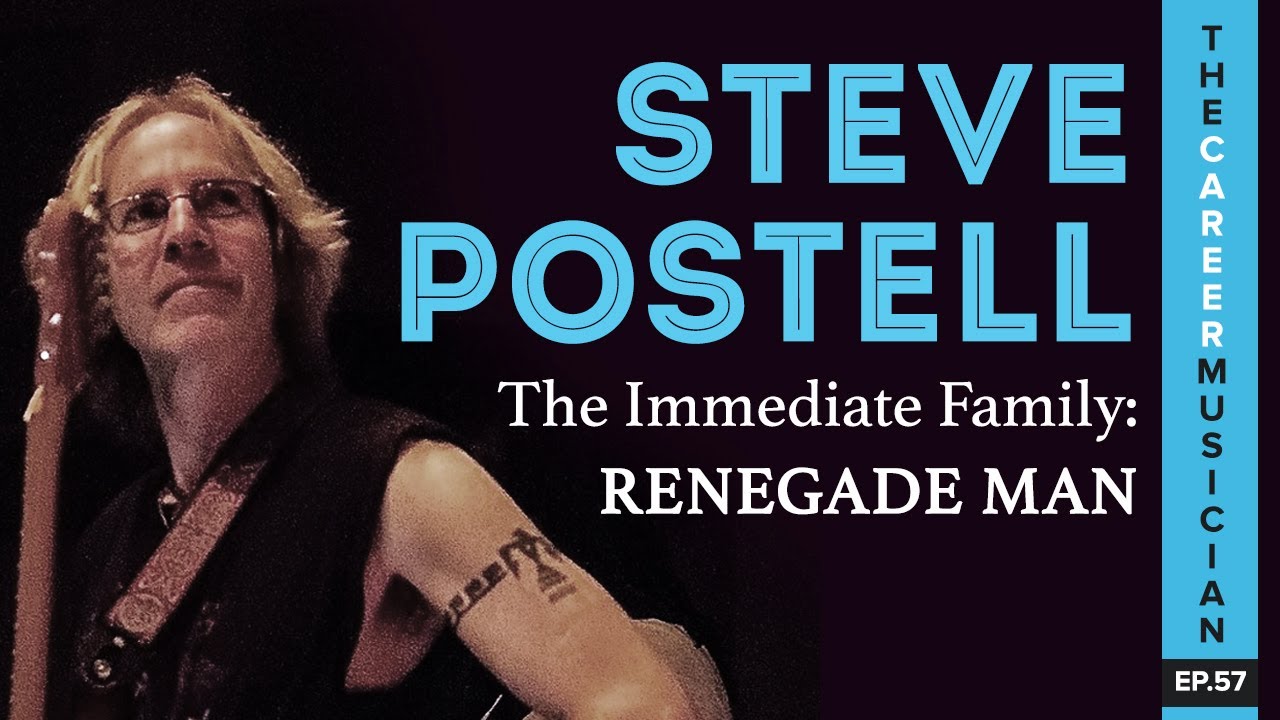
Steve Postell has been the engineer, the producer, the artist and the hired session guy, and he has done all of them a lot. In Episode 57 of The Career Musician, Nomad talks with the third guitar slinger of The Immediate Family, a singer, songwriter, guitarist, composer and producer whose recent solo record on Immergent Records brought in guests like David Crosby and Jennifer Warnes.
Wearing many hats isn't an accident for Steve. It was a decision he made at 16. If you are trying to build a versatile music career that lasts, his story is a blueprint. Here is what he shared.
Learn the craft so you can always work
Steve grew up in Manhattan in a home full of records and art. His parents took him to see Segovia at six. By 13 he was going to the Fillmore East. Up until about 16, the plan was simple: songwriter, band, musician.
Then he took a small painting class, and Bob Dylan was in it. Dylan wasn't performing at the time, and to a 16-year-old Steve he looked uncentered. Steve's thought was: he can be uncentered because he's Bob Dylan. What would happen to me?
"I better go to music school and learn a lot... so if I ever get in that position, I can still work."
Steve Postell, 3:51
He admits he was projecting. But it set the course. Nomad called it diversification, the same thing he pushes with his own students: don't just learn guitar, learn how to record, learn the whole thing.
Be the guy who can pull it off
Steve's very first guitar teacher played classical, sang in a folk group, worked on Broadway and danced. So from day one Steve was learning to read, sing, play classical and play folk songs, all at once. Later he went to music school for classical guitar, studied jazz harmony on the side, and kept a band going the whole time.
One day he was sitting in a teacher's little studio when the phone rang. The teacher didn't want to take a road tour of Man of La Mancha. He turned to Steve and asked if he wanted it, because this kid could pull it off: he played classical, he read, he played chords. Steve had never once thought about playing a Broadway show. He said sure, quit school, and went on the road.
That is Luck = preparation + opportunity in one phone call. He had spent years getting ready for a gig he didn't know existed. Broadway work carried him for about seven or eight years, ending with two years in the pit for Evita.
The bonus story: on one tour the star was John Raitt, who paid Steve extra to back him on a 25-minute set of his hits after each show. Raitt kept saying he couldn't wait for Steve to meet his daughter in Denver, who played and sang. Steve never put it together until she showed up. It was Bonnie Raitt.
Always be ready to step up
Steve was musical director for Lea Salonga on a promo tour for a pop single, a duet with a young Broadway singer. After a TV appearance went sideways and an argument broke out backstage between the managers, Lea's manager turned to Steve: you sing, right? Steve said yes. The young singer was fired on the spot, and Steve sang the duet for the rest of the tour, including on The Tonight Show.
Everything you do is an audition. Steve was hired to lead the band. Because he could also sing, he got the spotlight.
Keep the instrument in shape
Steve and Nomad agreed there is no retiring in this business. You play until you can't. So you have to stay in shape. Steve told a story he heard from Jon Bon Jovi about Tony Bennett's son saying his dad vocalizes every single day of his life. Steve practices, vocalizes and keeps the guitar going so the decline doesn't hit as hard.
He runs, lifts, bikes, plays tennis and skis. About eight years ago he noticed even one glass of wine dried his throat and made him sing worse the next day. Eventually he decided it wasn't worth it. When your throat is dry, you push. He would rather sing well for a long time.
Studio etiquette from every side of the glass
Because he has worked every seat, Steve knows what each person needs. As a producer, he never tells players what to play before they've done their own thing. He has been on the other side, and barking orders before someone plays a note makes them uptight.
He has seen it go wrong. On one session he engineered, an inexperienced producer asked Russ Kunkel to play like another famous drummer. Russ offered to give him the guy's number. Another time, a composer who writes out every note for film work asked Steve to play on his first solo record as a favor, then started dictating every note. Steve told him: if you want it written out, you don't need me. Anybody can do that.
In The Immediate Family, it works the other way. Four guys who have all produced lots of records, all chiming in, all knowing when to say something. One tune wasn't working, and ten minutes later it was rocking because everybody knew how to shift and adjust. Steve said Waddy once told him that before questioning a Danny Kortchmar lyric, he thinks about how many hit songs that guy wrote.
Be cool around your heroes
When he meets someone famous, Steve stands back. He has watched the crowd around his famous friends and knows how much pressure that is. When Keith Richards walked into the band's dressing room at a New York show, Steve didn't get in his face. He took in the moment. The band brought its A game, and at the end of the night Keith waved him over.
"He puts his hands on my shoulders and he goes, you know the only thing better than two guitar players? Three guitar players."
Steve Postell, 32:52
That is Low maintenance / no drama paying off. Let the work talk.
Do the business, but don't let it eat the music
When Steve came up, work was word of mouth.
"It was, does he do a good job and try to be a good guy? That was kind of... that was the job."
Steve Postell, 46:39
On the original music side, managers handled the business. Today it is the opposite: managers sign people who already have their business together and a following. Steve resisted self-promotion for a long time, but he accepts it is the deal. The band now has a team that is good at it and likes it. If you're young, though, there is no team. You're the team. Make Music Your Business.
His caution: don't let the promotion replace the hours. It took him far more than 10,000 hours to get good at playing, writing and engineering. Limit social media, say one hour a day, and don't just scroll late at night. Nothing replaces sitting down with your instrument.
And respect what came before you. Steve wants young players to surprise him with new technology, but to learn harmony first, read a poem before writing lyrics, and remember that Picasso could paint a lifelike portrait at 20 before he went off and did his own thing.
The takeaway
Steve made a choice at 16 to learn enough that he could always work. That choice got him a road gig out of a phone call, a duet on The Tonight Show and a seat in a band of his heroes. Learn the craft deep, learn it wide, stay in shape, and be the easy one in the room.
If you want help turning that kind of preparation into gigs, start with the free Get the Gig guide.
Get the gig. Keep the gig. Build the career.
Watch on YouTube or find every episode on the TCM Podcast page.
Your next step
If this episode lit something up, start with the free Get the Gig Guide. It is the career side of being a professional musician, the part nobody taught you.
Got an audition coming up? Grab Nomad’s Audition Secrets playbook, because everything you do is an audition.
And share this one with a musician who needs to hear it.
TCM listeners and readers get 20% off rehearsal studio time at PA Rehearsal Studios with code TCM20.