The Hollywood Score: Tim Davies on Orchestrating and Conducting for Film (Episode 42)
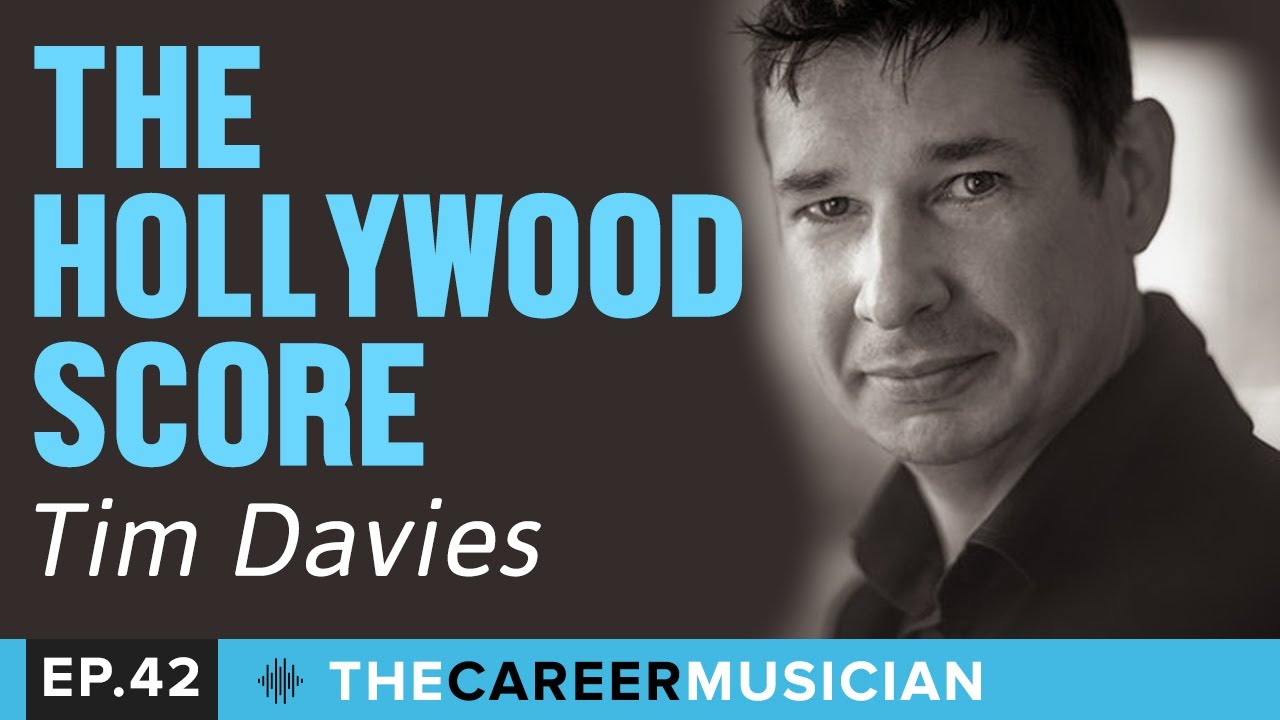
Everything you do is an audition.
Tim Davies showed up at Nomad's place in the valley straight off a scoring session at Warner Brothers the night before, and he was playing hooky from two more that evening. That is a normal week for one of the busiest orchestrators and conductors in Hollywood.
His credits include Frozen, La La Land, Minions, The Lego Movie 2, Ant-Man and the Wasp, Hotel Transylvania 3 and Empire, plus video game scores like Marvel's Spider-Man, Call of Duty: Infinite Warfare and God of War. Nomad and Tim met when Tim arranged and conducted Kenny "Babyface" Edmonds with the National Symphony Orchestra at the Kennedy Center. In Episode 42 he walks through what orchestrating and conducting for film really looks like on the biggest scoring stages in town.
A puzzle solver, not a film composer
Tim started on drums, dabbled in sax, and played whatever was lying around the house because his siblings played trumpet and French horn. He wasn't great at most of it, but he had sat in a band and at the back of an orchestra. That turned out to matter a lot once he was standing out front.
At the Queensland Conservatorium in Australia he started as a percussion major. His percussion ensemble had no repertoire, so while everyone else arranged Mozart, he transcribed and arranged Elton John's "Funeral for a Friend" and "Bohemian Rhapsody" by ear. When he couldn't get in front of the school orchestra, he put together his own.
A teacher handed him a brochure for the USC film scoring program. He applied for a grant, got the money, then had to get into the program, and did. The surprise was that he didn't want to be a film composer. The orchestration and conducting side was him. As he puts it, he just likes playing with dots. Every job is a puzzle, whether it is pleasing a director or translating something impossible from a composer's computer into parts a live orchestra can play.
Firebird and Rain
For the Babyface concert, Tim was in the shower when "Fire and Rain" came up on the set list and his brain went straight to Stravinsky's Firebird.
"If you want to make something happen, you have to tell everyone you're gonna do it, even though you don't know how to do it."
Tim Davies, 17:52
So he announced a Firebird and Rain mashup, then figured it out. It worked, and his right-hand orchestrator talked him into adding the big Firebird ending too.
The Kennedy Center wants something unique and collaborative from these shows, not just strings stapled onto the band. Tim has worked with that team for about six years now, across shows with Nas, Kendrick Lamar, Common and Maxwell. They trust him to show up with an hour and a half of charts. That is Work begets work: deliver every time and the calls keep coming.
He also balances the set so the artist isn't thinking too hard all night. A few brand new arrangements, then songs where the singer can go on autopilot and the orchestra fills the gaps.
The page is the rehearsal
Those shows get roughly one rehearsal and a soundcheck. Film sessions get even less: the musicians sight-read and you record. So the notation has to do the work.
"What I've learned from orchestrating thousands of pieces of music for movies is putting things on the page in a way that tricks everyone into... sounding like it's been played before. But it hasn't."
Tim Davies, 25:34
Film timelines keep shrinking because the movie keeps changing. Orchestration used to start four to six weeks out. Now three weeks is a good one, sometimes two. His crew splits the work and proofreads each other, then the copyists prepare parts the LA studio way: bar numbers everywhere and rests written out bar by bar, so a player can find bar 13 and pencil in four new notes without hunting.
Studio etiquette from the podium
This is where the episode gets gold for any session player. The LA studio players are scary good. When something is out of tune, everybody in the room already knows, so Tim rarely says it. He might have them run it without the click, or put someone in their headphones so a section can hear across a wide room. Problem solved without calling anyone out.
Timing is the opposite. A classically trained orchestra can play a rhythm with a classical feel, all together, and not notice that it fights the synth part. Tim knows it is coming but won't warn them ahead of time, because insulting 75 people before they play a note is a bad move.
The best players handle mistakes the same way. Tim once wrote a G flat in the second violin part, one note below the bottom of the instrument. The principal second violinist simply asked how he would like bar 27 phrased. No drama, no throwing him under the bus. Great players fix a wrong accidental quietly, mark every change in pencil for the next person who reads that part, and never waste the room's time. That is Low maintenance / no drama, and it is why they keep getting called.
Tim protects them in return. If a composer wants a fourth take of something that was fine, he asks what they are looking for, so the players know someone is looking out for them.
When the grenades land
Union sessions have an hour hold at the end, and overtime gets expensive fast with 75 players standing around. On The Lego Movie 2, two cues bounced between the stage and the dubbing room for two hours until they gave up and booked another session.
Sometimes the fix is easy. On one of the Frozen sessions, a moment just needed a suspended cymbal roll. Other times the composer needs 16 new bars on the spot. Tim once sent the orchestra on a break and rewrote a section on his laptop with the copyist looking over his shoulder, still typing as 75 players sat back down. That is the difference between a studio conductor and a concert conductor. You don't change Beethoven's notes, but in the studio you change notes all day.
He learned the people side the hard way. Early on he was too direct and annoyed some players. A few good people stuck up for him and pulled him aside, and he says one of those moments could have sent his whole career a different way. Every session is Groundhog Day: you get to play the game again and do better.
No excuse not to do it
Tim's advice to anyone who wants his job is blunt. Find a song that is just piano and vocal, add an orchestra, and post it. When he first got to LA, he asked a few people for names and had his own big band within three days. Some of those players still play with him.
"When you do get the gig, you're gonna be thrown in on the deep end... There's no excuse now for not doing it."
Tim Davies, 1:12:11
Everyone has a laptop and recording software. The reps you put in now are what carry you when the real call comes. That is Luck = preparation + opportunity.
The takeaway
Solve the puzzle in front of you. Put the right information on the page, read the people in the room, and protect the players who make you sound good. Then go do the work before anyone asks you to. If you are ready to chase your next call, grab the free Get the Gig guide, and see more of Tim's work at timusic.net.
Get the gig. Keep the gig. Build the career.
Watch on YouTube or find every episode on the TCM Podcast page.
Your next step
If this episode lit something up, start with the free Get the Gig Guide. It is the career side of being a professional musician, the part nobody taught you.
Got an audition coming up? Grab Nomad’s Audition Secrets playbook, because everything you do is an audition.
And share this one with a musician who needs to hear it.
TCM listeners and readers get 20% off rehearsal studio time at PA Rehearsal Studios with code TCM20.