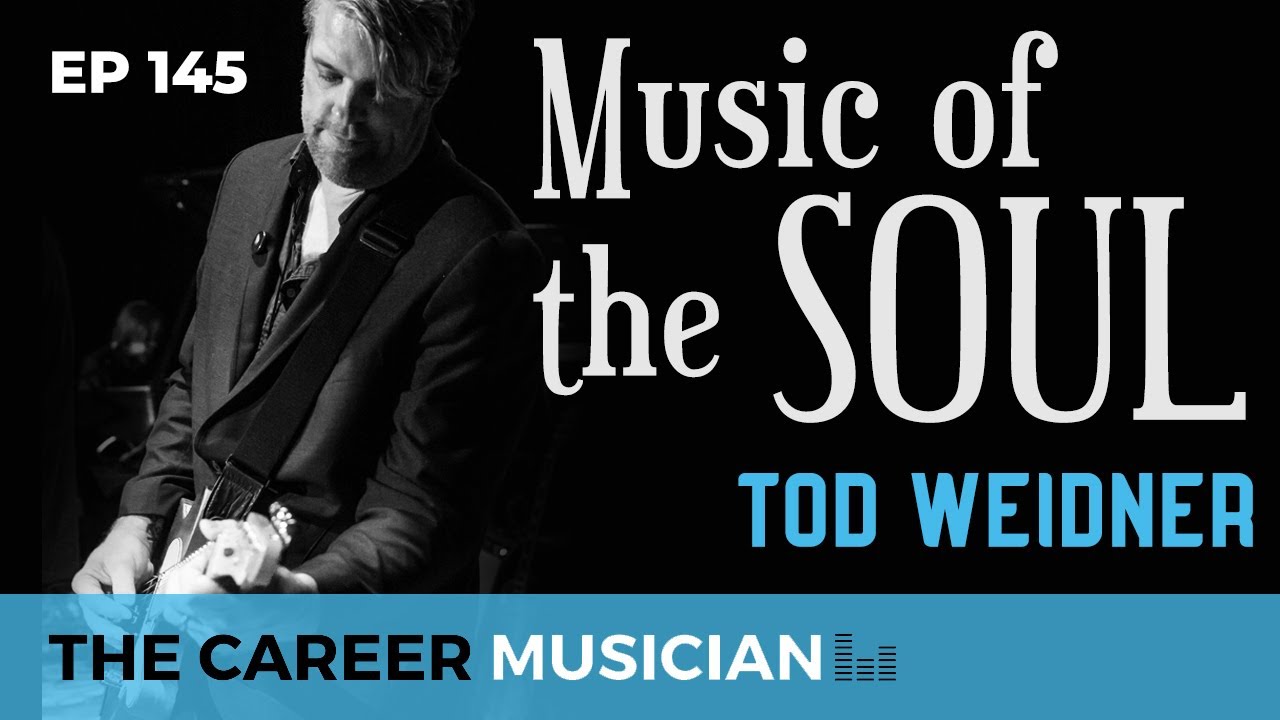
Tod Weidner on the Long Road to Becoming an Indie Singer-Songwriter (Episode 145)
Luck = preparation + opportunity.
Tod Weidner has been, in his own words, a foot soldier in the trenches for decades. He was a fixture of the Dayton, Ohio music scene, fronting the rock band Shrug for more than 27 years and six albums, before moving to the Bay Area to start a new chapter as a solo singer-songwriter. The late folk songwriter Bill Morrissey once called him one of the best lyricists he had ever heard.
Nomad was producing part of Tod's new album when they sat down for Episode 145. Their conversation is a lesson in patience for every independent singer-songwriter: self-education, the long road, home recording that holds up, and how to handle imposter syndrome when your heroes start returning your calls.
Educate yourself by ear and by history
Tod never went to music school and can't read music. His education was a stack of his mom's scratched-up 45s, a transistor radio, and a few albums: Jimi Hendrix's Smash Hits, the Stray Cats' Built for Speed, and Prince's Purple Rain. A year of nothing but Glenn Miller and Benny Goodman in junior high led to Louis Jordan, early rock and roll, folk harmonies from his parents' records, and Midwest 80s hard rock.
He is a music history nerd who traces influences back three or four generations. Ask him for a mixolydian scale and he might need time. Ask him for a Santana or Mark Knopfler thing and he can cop it. Nomad pointed out that the oral tradition is how people learned before music schools existed. And the feel matters most.
"I would much rather listen to something sloppy with a good feel than something perfect."
Tod Weidner, 9:45
The 10,000 hours make you a lifer
Tod played in out-of-tune high school cover bands for years before it occurred to him that someone writes these songs and he could too. His early songs, like everyone's, were terrible. Nomad's point is that the failures, the attitude problems, the band communication struggles are all necessary to get here.
"The 10,000 hours is really valuable, because you have to sit through a lot of crap, and if you're still hanging in there after that, you know you're a lifer."
Tod Weidner, 14:05
He paid those dues the hard way. Shrug charted on CMJ, played New York and Toronto, and once walked out of a meeting with Puff Daddy at Bad Boy after a publishing offer that just didn't seem fair. He played bass in Motel Beds. For five years he played in a Pink Floyd tribute band based in Nashville. Before their first gig, he drove from Dayton to Nashville every Sunday at 6 a.m., rehearsed all day, drove home by midnight and went to his construction job the next morning, for two months straight. A deep dive into someone else's style like that, he says, is an education he would recommend to anybody.
Know when your scene is too small
Tod loves Dayton: a nurturing, affordable town with a huge music heritage, from Zapp and the Ohio Players to Guided by Voices and The Breeders. He even hosted a three-hour public radio show there for five years, connecting Ella Fitzgerald to Bad Brains within three songs. But a nurturing scene can become insular, a big fish in a small pond echo chamber. When his wife landed a tech job in Santa Clara, he decided it was time to test his wings. Sometimes growth means leaving the room where you are comfortable.
Pro-sounding demos from a dining room
When the pandemic shut down his new San Francisco gigs, Tod went back to writing. He went in with four songs for this project and came out with 19. He did it with GarageBand on a MacBook Pro, a Line 6 Helix, mostly a Shure 57, Bobby Owsinski's mixing handbook and a frequency cheat sheet a friend gave him.
Nomad's first reaction to the demos was, why are we re-recording these? Several demo stems made the final album, including a guitar solo Nomad told him not to replay. The DAW doesn't matter, Nomad says. Knowing how to put sounds together does. His own rule: there are no demos, everything is a master, because anything unused can be repurposed for a music library later. Tod adds a writer's trick: he saves voice memo ideas into folders by key, so when a song is stuck going to C, he opens the C folder.
Gratitude, imposter syndrome and the right team
Through his longtime friend and executive producer Jack, some of Tod's songs reached legendary producers Jack Douglas and Shelly Yakus, who loved them. After those phone calls, Tod took a walk to McDonald's just to process it. The album sessions brought in players like drummer Steve Ferrone and singer Bernard Fowler. Nomad quoted Quincy Jones: a good producer knows the Rolodex is one of the most important instruments in the toolbox.
Tod has battled imposter syndrome, a Midwest underdog feeling that it could all go away at any moment. His wife cut right to it: either these people see real talent in you, or you have conned all of them, which would make you an evil genius. Tod's view is that you never want to lose all of that doubt, because it keeps you humble and grounded. Being surrounded by a cheerful, professional team helped him feel he earned his place. Nomad's word for it: team. No one operates in a vacuum.
And his message to every hopeful artist who hasn't gotten the break yet: do not be discouraged. Tod has been doing this since the late 80s, and it is only now coming together.
"There is no such thing as luck. Prepare now, that way when the door of opportunity does open, you just walk right through it."
Nomad, 42:45
Tod added the other half: treat people with respect, and that energy comes back to you. Luck = preparation + opportunity.
The takeaway
Feed your ear. Put in the hours. Record everything like it might be the master. Stay grateful, stay humble, and keep the right people around you. When your door opens late, it means even more. Everything you do is an audition, including the demo you cut in your dining room. When you are ready to turn your songs into a career plan, start with the free plan of attack (POA) worksheet.
Get the gig. Keep the gig. Build the career.
Watch on YouTube or find every episode on the TCM Podcast page.
Your next step
If this episode lit something up, start with the free Get the Gig Guide. It is the career side of being a professional musician, the part nobody taught you.
Got an audition coming up? Grab Nomad’s Audition Secrets playbook, because everything you do is an audition.
And share this one with a musician who needs to hear it.
TCM listeners and readers get 20% off rehearsal studio time at PA Rehearsal Studios with code TCM20.