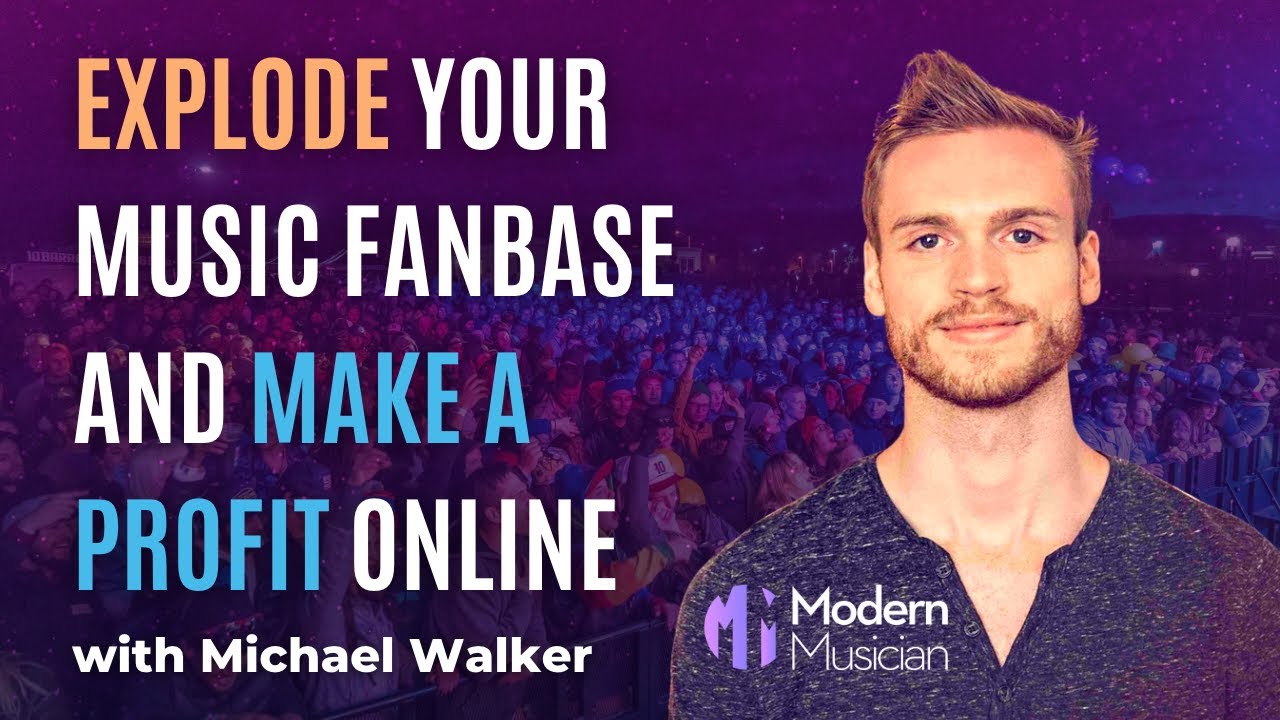
Tour Hacking: Michael Walker on Growing Your Music Fan Base (Episode 161)
Make Music Your Business.
Booking the tour is the easy part. Getting people to show up is the job. In Episode 161 of The Career Musician, Nomad talks with Michael Walker, founder of Modern Musician. With his band Paradise Fears, Michael went from living out of a car to selling 24,000 albums in six months and reaching number two on the iTunes Alternative chart, all using grassroots techniques.
Now he coaches artists through a three-tier system: Artistic Identity, Passionate Fan Base and Revenue Multiplier. If you want to know how to grow your music fan base and actually make it profitable, this conversation breaks it down from parking lots to ad dashboards.
Tour hacking: go where the real fans already are
The band started in high school and learned fast that booking shows is not enough. Their first tour meant playing to the bartender and sleeping in their van in Walmart parking lots, living on peanut butter tortillas.
Then their singer had an idea they called tour hacking. Bands they loved, like All Time Low, Mayday Parade and Blink-182, had fans waiting in line for hours before every show. So the six band members split into three pairs, followed three different tours, and walked up to those lines to share their music.
Michael was a shy, awkward kid. He remembers shaking and stuttering. It worked anyway. They sold 24,000 CDs in about six months from scratch, and that led to All Time Low inviting them to open on the next tour. Even then, they kept working the lines, and Michael says they made two or three times more in merch before the shows than during them.
Why did it work? Two reasons. They were talking to the right people, fans who had already spent money and shown up. And every interaction was a real two-way conversation.
Make the offer generous and the connection real
The details matter. They cut 20 to 30 second clips of the most compelling moments, and used cheap earbuds split so two people could listen at once. A shared listen beat a speaker every time. If people liked it, the pitch was honest: the CD is ten dollars, it supports new music and touring, but if you don't have ten dollars, take it for free.
"The reason I'm out here right now isn't because I'm trying to sell as many CDs as possible. It's because I'm really looking to connect with as many people as possible."
Michael Walker, 11:20
About four out of five groups paid full price. Some people handed over more. Then the follow-up: they collected emails in a notebook, drove to a McDonald's with wifi after every show, and added each person on Facebook to keep the conversation going. Michael thinks that follow-up was just as powerful as the first contact.
Nomad's point: no matter how fast technology moves, human connection wins. That is Energy and Humility together, and a reminder that everything you do is an audition, even standing in a parking lot.
Lean into your strengths as a team
All six members grew up together in a small South Dakota town and went all in, all for one. Each person brought different strengths. Michael handled the tech side, like the Ableton Live sessions and live tracks, while their singer was the natural front man.
Nomad's philosophy fits right in: lean into your strengths, and work on your weaknesses little by little. Six people doing what they are naturally gifted at multiplies everything.
Virtual tour hacking: the same idea, online
When Michael stopped touring to start a family, he lost a big piece of his identity. He invested in a mentor, reflected on what had actually moved the needle, and started teaching tour hacking. One of the first bands he coached made eleven thousand dollars in a month doing it. About 20,000 musicians went through his workshop.
But he found that about 98 percent never went out and did it. Day jobs, families, then a pandemic. So the team spent years testing what works online. Their answer mirrors the parking lot: a sponsored post that opens a conversation in Messenger, where you share a song, ask questions and get to know the fan. Then you use your most engaged fans to build a lookalike audience of people just like them.
Know your two numbers
Michael says you only need two numbers to know if your ads work: cost per acquisition and value per acquisition. Spend a thousand dollars to reach a thousand fans and your cost is a dollar per fan. If all you have is streaming, those fans might be worth a few pennies each. If two of them buy a thousand-dollar offer, your value per fan is two dollars, and now the campaign pays for itself.
That is why he recommends building several offers at different price points, from five to fifty dollars, a monthly option, and a high-end offer. Start ads at a dollar a day to get the system working before you scale.
"If there's an ATM that you put in a dollar and then it just gave you two dollars back, then would you ever stop?"
Michael Walker, 32:10
Don't outsource your fan relationships
Michael warned about done-for-you promotion. At worst, you pay for fake followers. More often, numbers spike and then drop to zero when the campaign stops, because no real relationship was built. Early on, he believes your marketing is too important to hand off. If you have more time than money, invest the time. If you have money, invest it to buy back your time.
He also talked about making peace with money. Many musicians feel ashamed of wanting it. His breakthrough: the more he makes, the more he can invest in better recordings, better collaborators and being a better role model for his family. That is Savvy.
"Money is a resource that is a tool, but it's replenishable, and it's not nearly as precious as time."
Michael Walker, 42:13
The takeaway
Find the people who already care. Talk with them, not at them. Know what a fan costs you and what a fan is worth, and build offers that give your best fans more ways to support you. Whether you are an artist or a hired gun, the career side is learnable. Start with the free Get the Gig guide.
Get the gig. Keep the gig. Build the career.
Watch on YouTube or find every episode on the TCM Podcast page.
Your next step
If this episode lit something up, start with the free Get the Gig Guide. It is the career side of being a professional musician, the part nobody taught you.
Got an audition coming up? Grab Nomad’s Audition Secrets playbook, because everything you do is an audition.
And share this one with a musician who needs to hear it.
TCM listeners and readers get 20% off rehearsal studio time at PA Rehearsal Studios with code TCM20.