What Makes a Pro Musician? 3 Things That Set Pros Apart (Episode 175)
Reliability beats virtuosity.
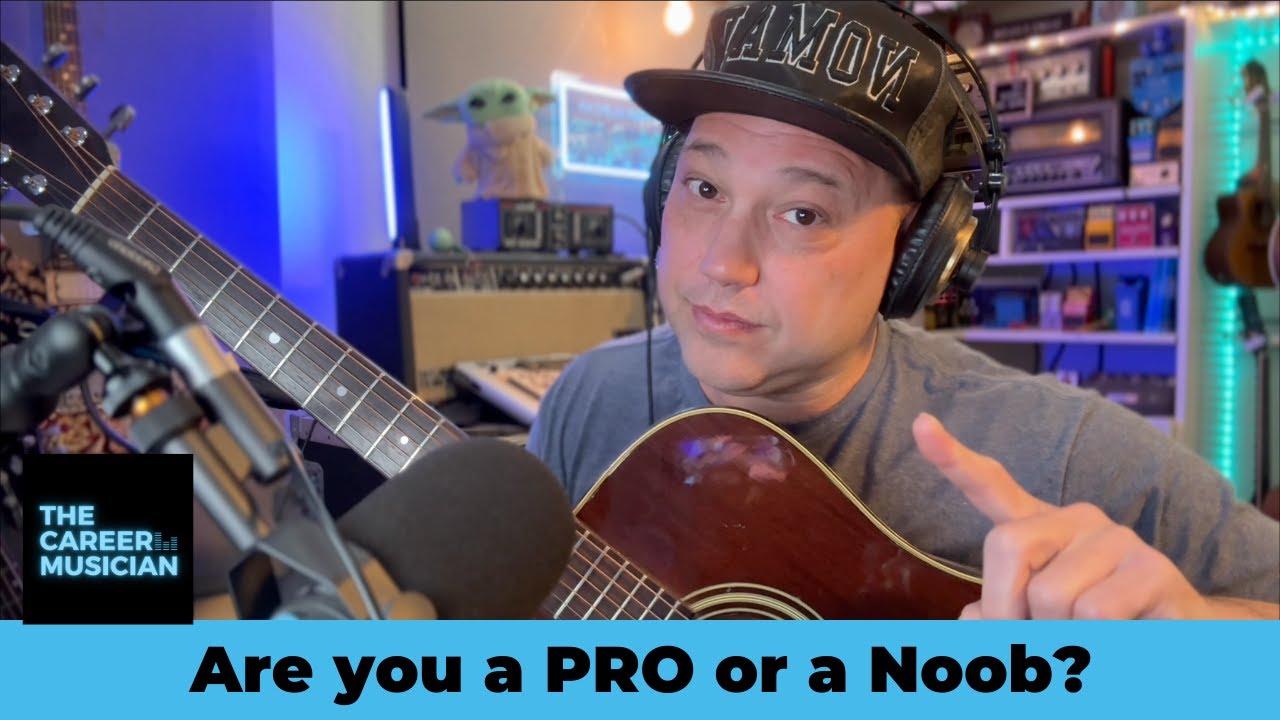
Plenty of people can play. Fewer people are professionals. In Episode 175 of The Career Musician, Nomad draws on more than 30 years as a session and touring guitarist, and his newer work as an author, educator and film composer, to break down what makes a pro musician, and the three things that separate a career musician from a hobbyist.
It all starts with a decision, he says, quoting his book ETHOS: a decision to be great. Identify your raw talent, decide to be great at it, hone the craft, and decide to turn your passion into your profession. Then live like a pro. Here is what that looks like.
1. Dedication: don't wait for motivation
Are you really dedicated, or are you waiting for inspiration to strike? Pros don't wait. They get up and do the things they know they are supposed to do. Follow the process, trust the process, do the work, no matter what. That is discipline, and it shows.
"We don't wait for motivation. We get up and do the things we know we're supposed to do."
Nomad, 2:56
2. Communication: never ghost
Charts, emails, artwork mockups, a database of cues for a cue sheet: you might do those tasks alone, but you are almost always part of a team. That team might be a duo (Nomad and his wife Lola work as one), a 12-piece band, or an operation of hundreds of people.
His example: he was composing a film score, and the director mentioned a marketing call for the film with more than 50 people on Zoom. The composer is one part of a giant organism. So don't blow people off, and don't ghost people. Sometimes a one-word reply like "understood" or "copy that" means the world.
3. Show up prepared, and early
Show up ready to do the work. Period. No excuses, beyond the truly uncontrollable. Everyone else on the team managed to be on time.
Sometimes showing up means your deliverables. As a composer, Nomad has to hand over stems and files exactly to the specs of the music editor and sound mixer. And on a gig, it means early. Twenty minutes early, he says, is barely on time. For a 7:00 downbeat, he has been known to arrive at 4:00: room for traffic, a flat or a ticket, time to unpack calmly, grab a bite, set up and be happy to be working.
"You got there 20 minutes early? That's not early. That's just barely on time."
Nomad, 7:22
He tells one more story. Driving to a desert casino gig, the bandleader offered everyone a ride in his van. Nomad took his own truck, his own gear, on his own time. He ended up the only one who showed up. Being overprepared is okay. That is reliability beats virtuosity, plain and simple.
How pros think
Nomad runs through a few familiar contrasts. Amateurs fixate on their weaknesses. Pros build on their strengths and team up with people who are strong where they aren't, like a track producer partnering with a great vocal producer. Amateurs focus on being right. Pros focus on the best outcome, which is Objectivity, the O in ETHOS. Amateurs think a good result comes from their brilliance. Pros know it comes from teamwork, and sometimes luck. And pros think long term: longevity, not one-and-done.
Many of the biggest gigs he has played had no rehearsal at all. The prep happens on your own time, like the player who gets the call and makes charts on the plane. Forget the 10,000 hours rule, he jokes. Pros put in 100,000.
Take your tools seriously
He closes holding a guitar that belonged to his late father, an old Takamine his dad played around the house as a hobbyist. Nomad took it to his tech, had the frets dressed and the bridge adjusted, and turned it into a professional instrument. Same guitar. Pro setup. That is the whole episode in one object.
The takeaway
Dedication, communication, and showing up prepared. Do those three every time and people will know they are working with a pro. Everything you do is an audition. To prepare like one, grab the free Audition Secrets guide.
Get the gig. Keep the gig. Build the career.
Watch on YouTube or find every episode on the TCM Podcast page.
Your next step
If this episode lit something up, start with the free Get the Gig Guide. It is the career side of being a professional musician, the part nobody taught you.
Got an audition coming up? Grab Nomad’s Audition Secrets playbook, because everything you do is an audition.
And share this one with a musician who needs to hear it.
TCM listeners and readers get 20% off rehearsal studio time at PA Rehearsal Studios with code TCM20.