Write Your Way Out: Damon Thomas on How to Become a Music Producer (Episode 94)
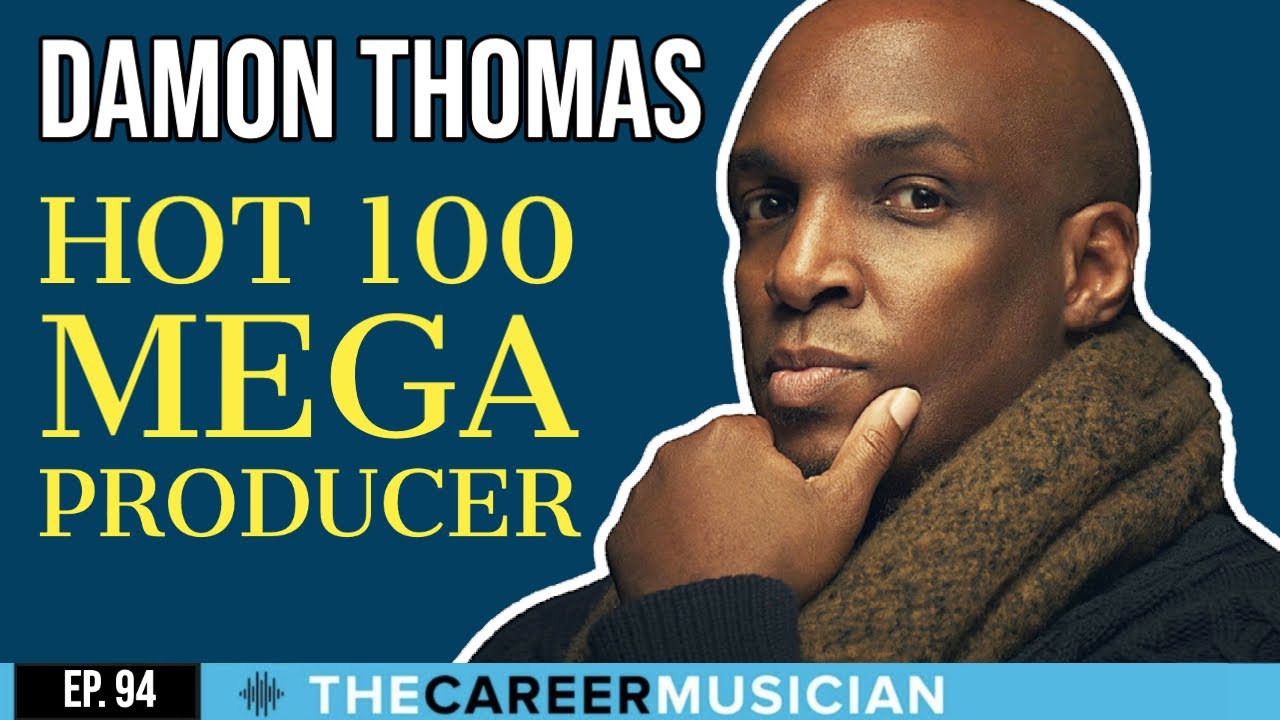
Everything you do is an audition.
Six Grammys. More than 200 million records sold. Three decades of writing and producing, from his early work alongside Kenneth "Babyface" Edmonds to the hits he built with Harvey Mason Jr. as The Underdogs. In Episode 94 of The Career Musician, Damon Thomas sat down with Nomad and said something you would not expect from a guy with that resume: he is still working like his lights are about to get cut off.
If you want to know how to become a music producer who lasts, not just a guy with a hot beat, this is the episode. Here is what Damon laid out.
Every era, you start over
Damon counts three careers. First it was Damon on his own, grinding in California from 1989. Then came the Babyface era, which gave him his first number one records. Then, at the height of that success, Kenny told him something he did not understand at the time: go start your own thing, because nobody is going to notice how talented you are if you stay behind me.
So he and Harvey started The Underdogs in 2000, and they had to start over. Nobody cared what you did with Babyface. They built it for 16 years. Now he is building again with his own company, Thomas Krown, and he says it took a couple of years to ramp up, even with everything behind him.
"I can't be focused on what I did or all the movies we did or any of that. I got to be focused on the task at hand. Still rebuilding, working hard."
Damon Thomas, 9:38
Damon tells his wife, who is also his business partner, the same thing: we are only as good as what we did yesterday, and yesterday doesn't count. That is Everything you do is an audition. The last hit does not get you the next one. The work does.
Don't chase the star. Find the next one.
Early on, Kenny asked Damon who he wanted to work with. Damon said Usher and Whitney Houston. Kenny's answer stuck: you don't want Whitney, you want the next Whitney. Whitney has already done everything. What makes you important is discovering the next person.
That became The Underdogs' edge. Damon says they were among the first to work with Chris Brown, Mario, B2K and Omarion. And the volume behind it is real. For one recent Chris Brown album, Damon submitted 15 songs, knowing one or two might make it. The rest go to new artists, because you never know who the next one will be.
That is Work begets work: keep the songs moving, and keep your eyes on the people coming up.
Write your way out
In the first year of his publishing deal, the label behind the projects he worked on went under. Those songs would not count, and he was in suspension. Kenny's answer was one of his famous phrases: you got to write your way out of it. Damon did, and he says those angry, hungry songs were some of his best.
The same goes for finding your sound. When The Underdogs started, Damon says their music sounded like Babyface and Rodney Jerkins had a kid. It took two years and a couple hundred sessions to write their way into something that was theirs.
"People get frustrated after they make 10 beats. I'm like, bro, you got to keep writing. Somewhere you're going to run right into the wall and be like, wow, that's one of them records."
Damon Thomas, 17:24
His good news for newcomers: it is easier for you in one way, because nobody has heard your music yet. You have an open field. Use it to build a sound people can recognize.
A producer is not just a beat maker
Nomad asked Damon to break down the difference, and he did not hold back. Making beats and hoping a writer puts magic on them makes you a track guy. A producer can walk into a studio, never touch an instrument, and make sure a record gets done. Quincy Jones knew which musicians to call.
Damon learned that from Kenny on Faith Evans' "Never Gonna Let You Go," his first number one. Damon wrote the demo himself. Kenny kept the Rhodes and the chorus, reworked the verse lyrics, stripped the programmed drums and bass, and brought in live players one at a time. That is when the light went on. Years later, on Dreamgirls, Damon cast players for each section of each song.
"I looked at it like actors in movies. I'm gonna cast this musician for this part. I'm gonna cast this musician for that part. That's the difference between a beat maker and a producer."
Damon Thomas, 27:48
He is honest about his own lane, too. His strength is chords, melody and creating the magic. He is not a mix engineer, so he surrounds himself with great ones. That self-awareness is Objectivity from the ETHOS code.
Take the long money
The Dreamgirls offer came in at a fraction of what he and Harvey were getting per song at the time, for 25 songs. Damon told Harvey they had to do it anyway: a big film, a chance to prove they could score a movie. The 25 songs turned into 61 pieces of music over 16 months. They took less up front and built in a royalty, and that first royalty check, he says, came close to a million dollars each. Film work followed for years.
Talent is not enough: learn the business
Damon calls himself a champion for the creatives, and his warning is blunt. Contracts have trends just like music, and deal terms that made sense years ago may not today. On one recent independent deal he turned down points and asked for a percentage of the net instead, because that is where the money is now. Read Don Passman's music business book, then read something newer, and learn to speak the language in the room.
"It's not enough to just be talented. You have to be a lot of other things... You got to be able to get in the room, understand, be able to talk the language."
Damon Thomas, 37:43
That is Make Music Your Business, and Savvy from ETHOS. Some business people will smile in your face and take your money if you let them. Don't let them.
The takeaway
Damon Thomas has the hits, the films and the Grammys, and he still approaches every day like the new guy. Find the next artist, not the last one. Keep writing past the point where most people quit. Learn the difference between making a beat and making a record. And learn your contracts. You learned how to make music. Nobody taught you how to make a living making music. Episodes like this one are where you start. If you have an audition coming up, prepare like a pro with the free Audition Secrets guide.
Get the gig. Keep the gig. Build the career.
Watch on YouTube or find every episode on the TCM Podcast page.
Your next step
If this episode lit something up, start with the free Get the Gig Guide. It is the career side of being a professional musician, the part nobody taught you.
Got an audition coming up? Grab Nomad’s Audition Secrets playbook, because everything you do is an audition.
And share this one with a musician who needs to hear it.
TCM listeners and readers get 20% off rehearsal studio time at PA Rehearsal Studios with code TCM20.